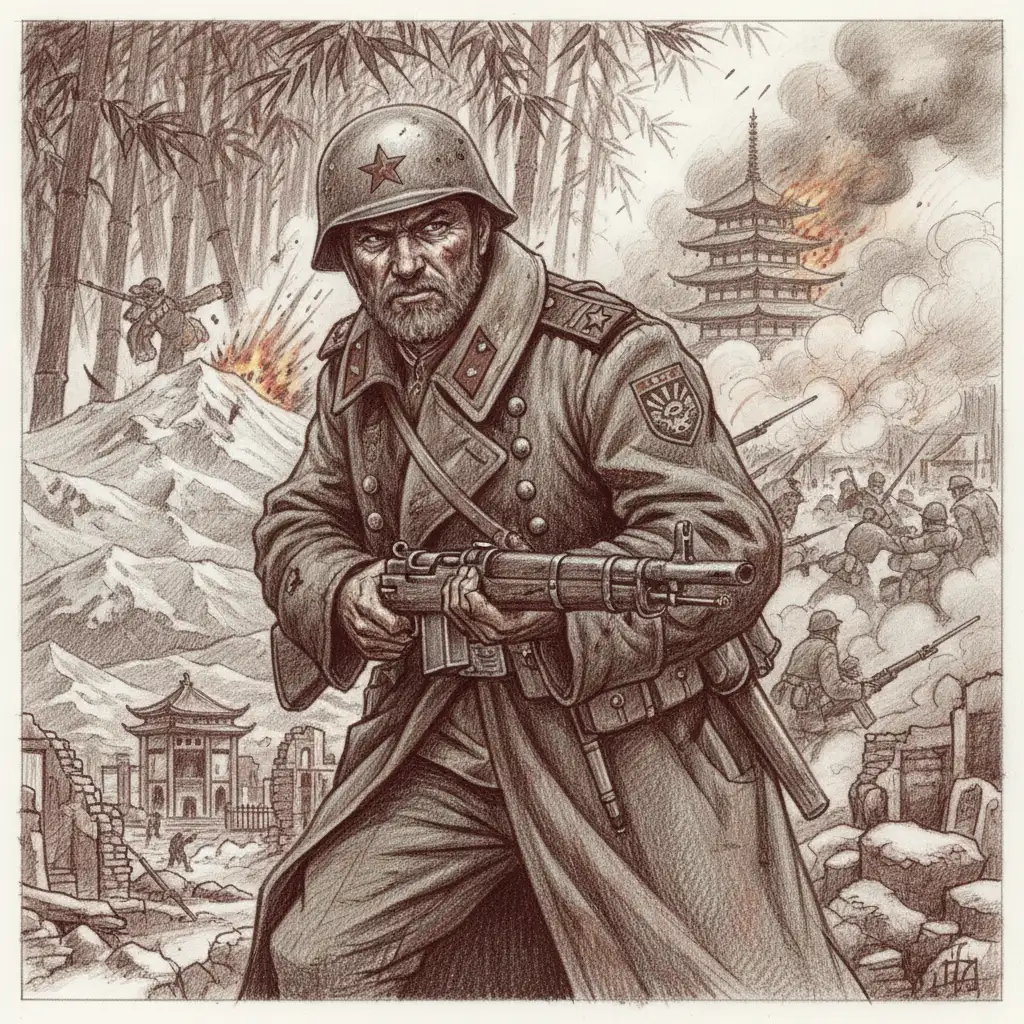
The 53rd Army was a Soviet military group formed in August 1941, playing a role early in World War II. Its first task was to participate in the Anglo-Soviet invasion of Iran. This important mission helped protect vital oil fields and secured supply routes for war materials coming to the Soviet Union. After overcoming initial resistance and advancing into Iran, this first formation of the army was disbanded in December 1941.
The army was reformed in May 1942 and then fought in many significant battles across Eastern Europe. Its soldiers were involved in famous clashes such as the Demyansk Pocket, the Battle of Kursk, and the intense fighting for Belgorod. They also helped push across the Dnieper River and fought in the Korsun–Cherkassy Pocket, making big advances through Ukraine. Later, the 53rd Army entered Romania, even reaching Bucharest in August 1944, and then fought bravely in Hungary, including the Battle of Debrecen. The army helped capture key cities like Brno and participated in the final Prague Offensive, marking the end of its fighting in Europe.
Following the European victory, the 53rd Army was quickly moved to the Far East. There, it joined the Soviet invasion of Manchuria, fighting against Japanese forces. The 53rd Army was officially disbanded in October 1945, having made a significant contribution throughout the entire war.