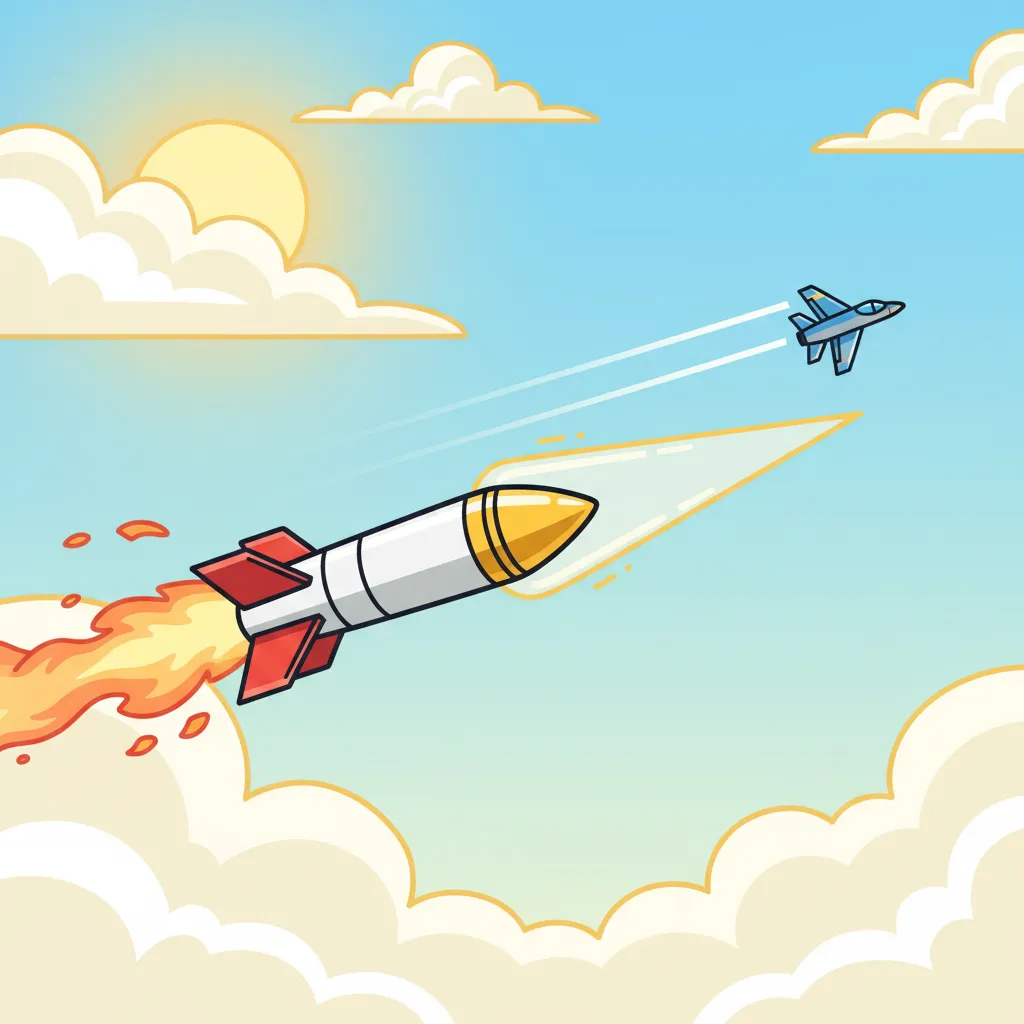
The AIM-9 Sidewinder is a famous short-range missile used by aircraft to shoot down other planes. It first joined the U.S. Navy in 1956 and the Air Force in 1964, making it one of the oldest and most successful missiles ever. Many air forces around the world still use updated versions of this missile today. Even the Soviet Union copied its design to create their K-13 "Atoll" missile.
Early Sidewinders used an infrared guidance system, meaning they chased the heat from an enemy aircraft's engines, usually from behind. This "tail-chasing" method wasn't always successful in wars like Vietnam. However, newer versions, like the AIM-9L, could track targets from any angle, making them much more effective, as seen in the 1982 Falklands War. The missile is known for its light and compact design, using small fins called canards to steer and a rocket motor to fly. It has special parts called rollerons on its tail fins that spin to keep it stable in the air. When it gets close to an enemy plane, its warhead explodes into many tiny rods, designed to damage the aircraft.
More than 110,000 Sidewinders have been made, and they are credited with about 270 aircraft kills. Because it's affordable, flexible, and dependable, experts believe the Sidewinder could remain in service for many more decades, possibly even into the late 21st century. One of its most famous moments was in 1958, when a Taiwanese F-86 shot down a Chinese MiG-15 using an AIM-9B, marking the world's first successful air-to-air missile kill in history.