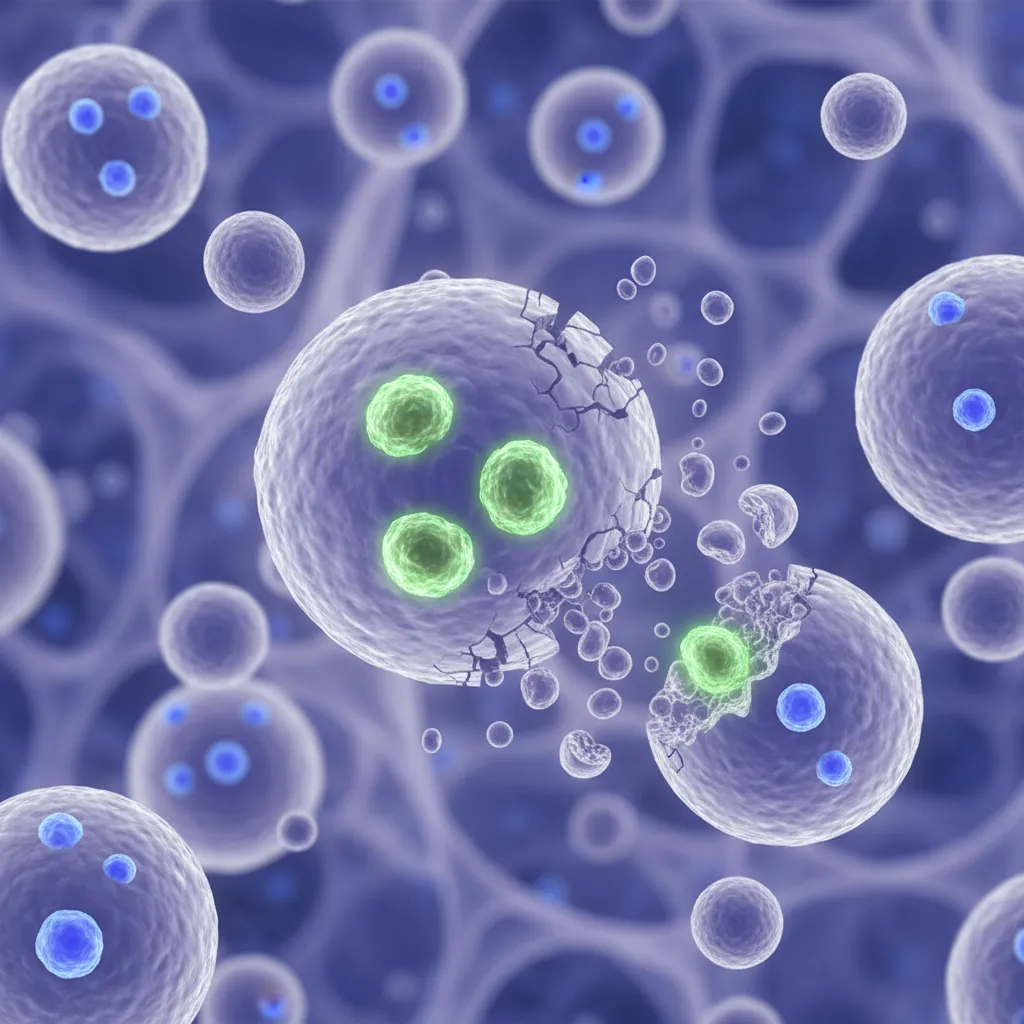
Apoptosis is a special kind of programmed cell death that happens naturally in your body and in other living things. The word "apoptosis" comes from ancient Greek and means "falling off," like leaves from a tree. Every day, an adult human body loses billions of cells this way, and for someone your age, it's about 20 to 30 billion cells daily. This process is very controlled and organized, unlike accidental cell death, which is called necrosis.
Apoptosis is actually very useful and important for growth and health; for example, it helps create separate fingers and toes when a baby develops. When cells undergo apoptosis, they break into small pieces that other cells clean up neatly, preventing any mess or damage to surrounding healthy cells.
Once apoptosis begins, it can't be stopped, so it's carefully managed by two main ways: the intrinsic and extrinsic pathways. The intrinsic pathway is when a cell decides to end itself because it senses stress or damage from within. The extrinsic pathway happens when a cell gets signals from other cells telling it that it's time to die. Both of these pathways use special enzymes called caspases, which are like tiny scissors that break down cell parts and lead to the cell's demise.
If apoptosis doesn't work correctly, it can lead to health problems; too much cell death can cause tissues to shrink, and too little can lead to conditions like cancer. Scientists first described parts of this process over a century ago, but it was named "apoptosis" in 1972 by John Kerr and his team. In 2002, some scientists even won a Nobel Prize for finding the genes that control this important process in living organisms.