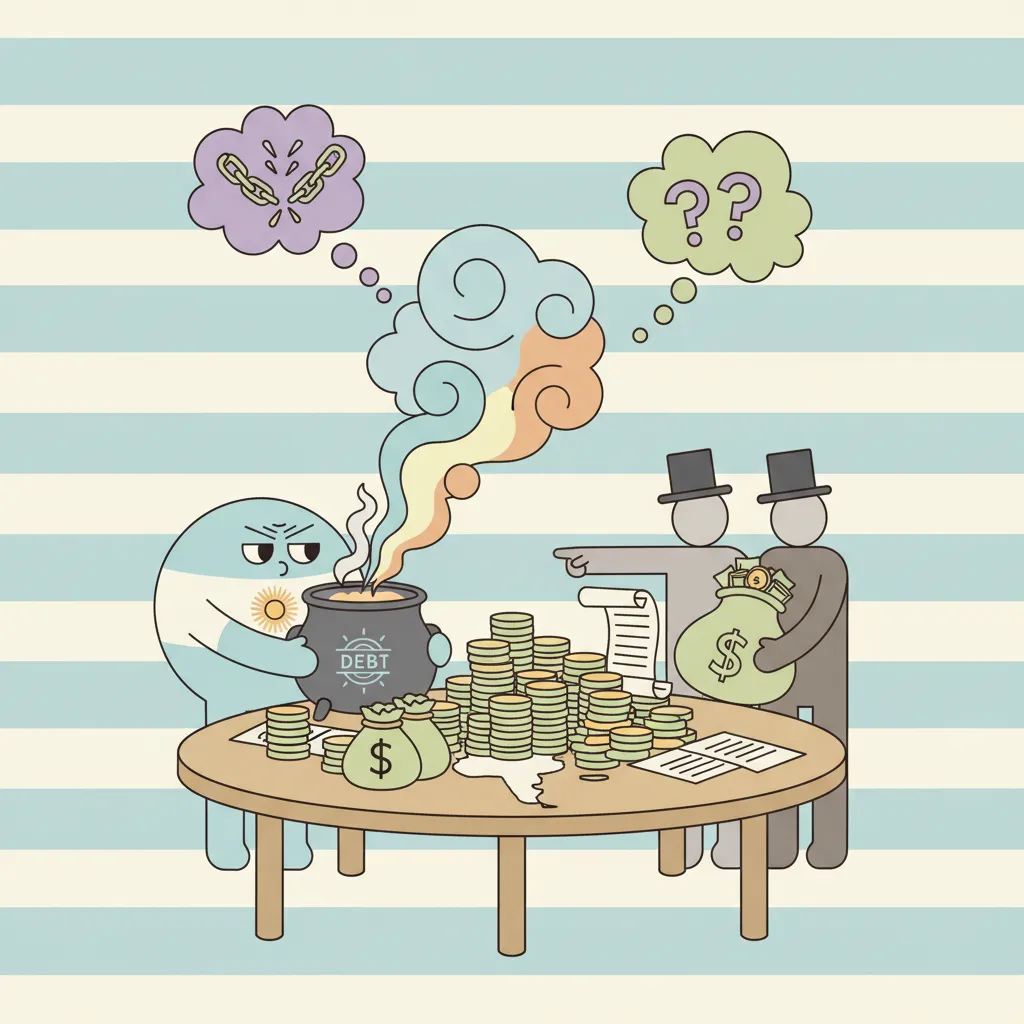
Argentina faced a huge economic crisis in 2001 and couldn't pay back about $82 billion it owed to many people and organizations worldwide. To fix this, in 2005, Argentina worked out a deal, and about 76% of those who owned its bonds agreed to get back a smaller portion of their money, helping the country start paying its debts again.
Later, in 2010, another deal was made, and around 93% of the bondholders accepted new payment terms. However, a small group of bondholders, about 7%, refused these offers. These "holdouts" often included special investment funds that had bought the bonds cheaply and wanted to be paid back in full.
A US court then ruled that Argentina had to treat all bondholders equally. This meant Argentina couldn't pay the 93% of bondholders who had agreed to new terms unless it also paid the 7% holdouts their full amount. This created a big problem because if Argentina paid the holdouts in full, an old rule could have forced it to pay the other 93% in full too, an amount the country couldn't afford.
Because of this legal fight, Argentina couldn't make some payments and was again labeled as defaulting on its debt. The situation raised concerns globally about how a few investors could stop a country from restructuring its debts. In 2015, under a new government, Argentina finally settled with many of the remaining holdouts. However, the country faced another debt default in 2020 and is still working on negotiations to restructure its large debt once more.