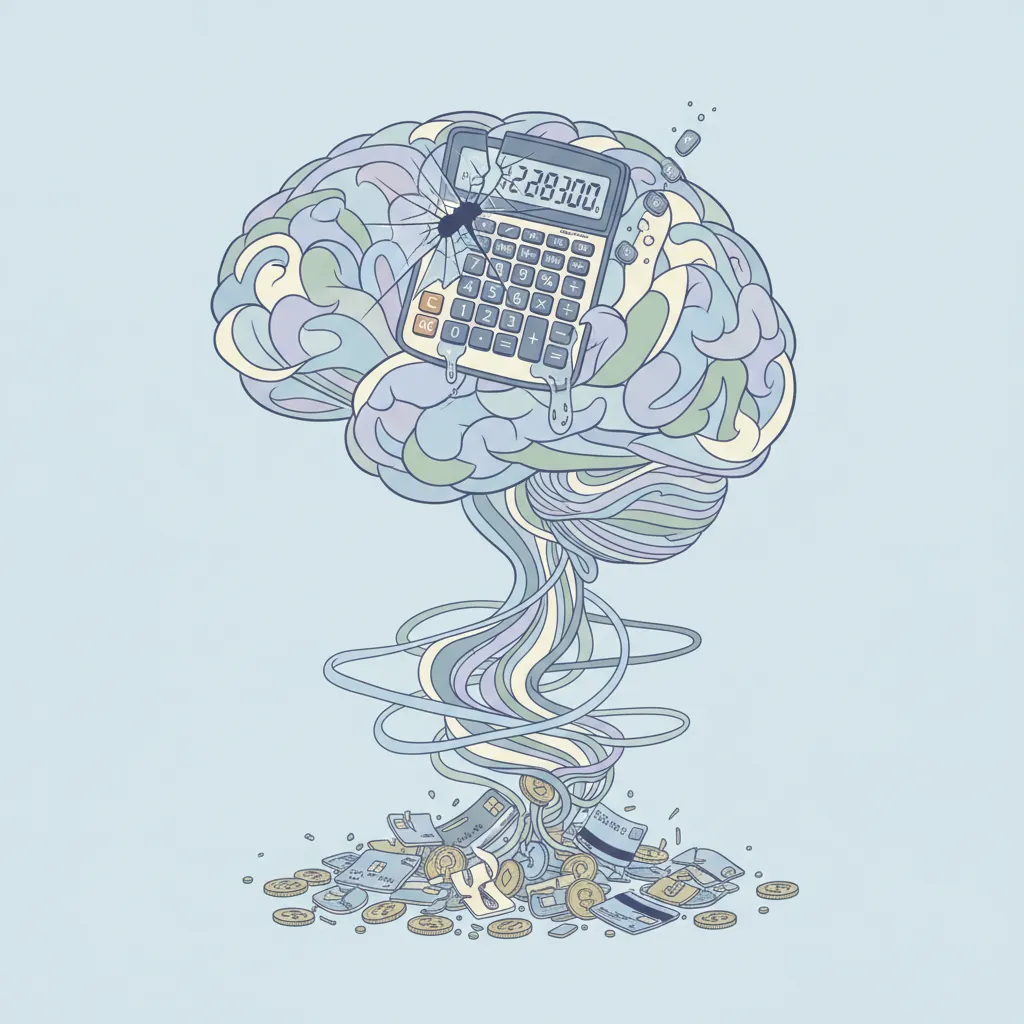
Behavioral economics looks at how our thoughts, feelings, and social surroundings affect the decisions we make every day. It helps us understand why our choices sometimes don't line up with what older economic theories predict about perfectly rational behavior. This interesting field combines insights from psychology, brain science, and standard economic ideas to paint a fuller picture of human decision-making. While it became a distinct area in recent decades, its roots go back to thinkers like Adam Smith in the 1700s, who considered human desires in economics.
For a while in the early 1900s, economists moved away from using psychology, fearing it would make their field less scientific. They preferred to think of people as always being perfectly rational and self-interested in their choices. However, psychology made a strong comeback in economics during the 1960s with what was called the "cognitive revolution." Important researchers like Amos Tversky and Daniel Kahneman showed how understanding real human thinking could greatly improve economic models. Kahneman even received a Nobel Prize for his groundbreaking work in this area!
One big idea is "bounded rationality," which suggests our ability to be fully rational is limited by how complex a decision is, our brainpower, and how much time we have. This means we often take mental shortcuts, which don't always lead to the absolute best outcome. Behavioral economists study these shortcuts to help us make smarter choices. For example, "Nudge theory" suggests small changes in how choices are presented can gently guide people towards better decisions, like placing healthy food where it's easy to see. Another important theory, "Prospect Theory," explains that people feel the pain of a loss much more strongly than the joy of an equal gain, a concept called "loss aversion."