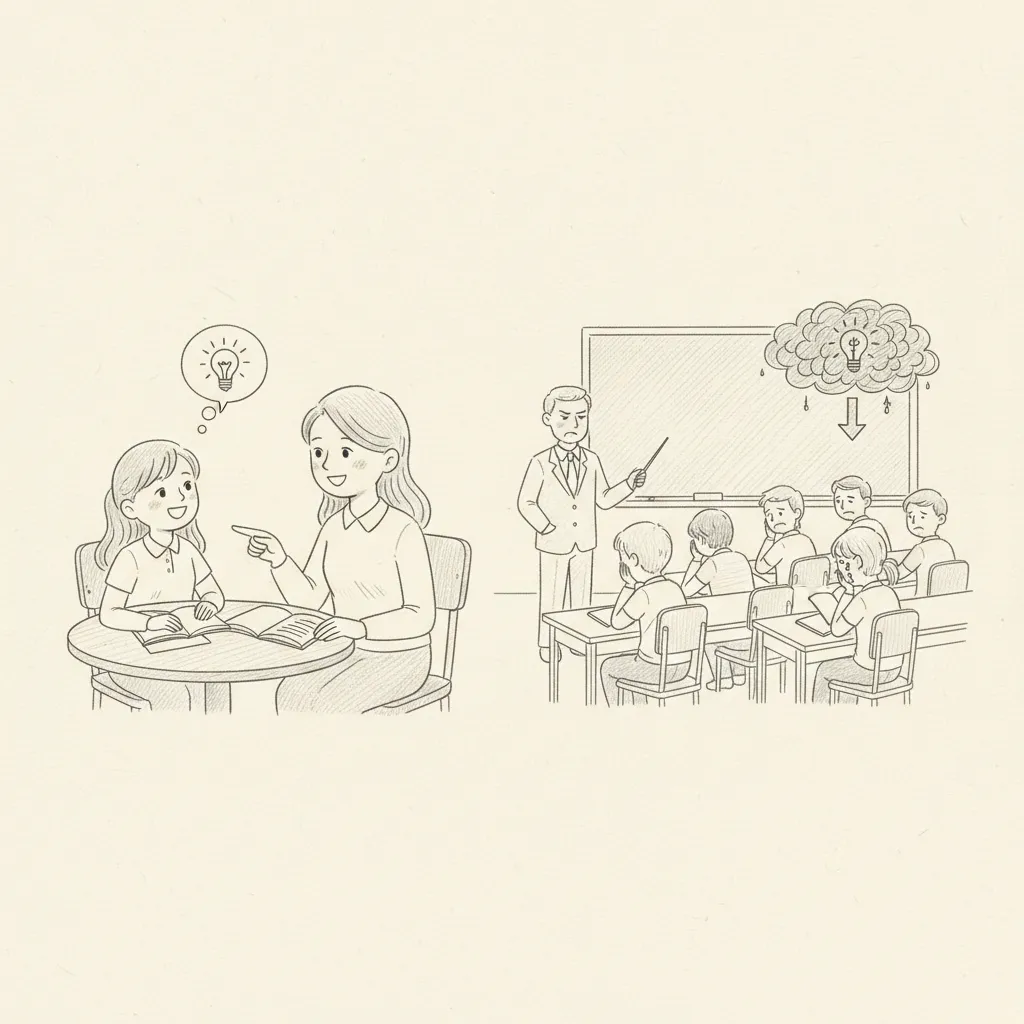
Imagine learning something new and getting personal help from a tutor every step of the way. That's what Benjamin Bloom discovered with his "2 sigma problem" in education, a finding that amazed many. He found that students who received one-on-one tutoring using a special method performed much, much better than students in a regular classroom setting. An average student who was personally tutored actually did better than 98% of students taught in a traditional group. It was also noted that a high percentage of these tutored students reached the same level of success that only the very best students in a normal class achieved.
The big challenge, as Bloom saw it, was figuring out how to make regular group classes just as effective as having a personal tutor. This discovery inspired many people to look for new and better ways to teach, even leading to smart computer programs that act like tutors. A key part of Bloom's idea is called "mastery learning," where you have to completely understand one topic, like getting 90% on a test, before moving on. If you don't quite get it, you receive extra help and practice until you truly master it, focusing on your individual success.
Bloom realized that giving every student a personal tutor wouldn't be possible for most places because it's simply too costly. So, he encouraged educators and researchers to find combinations of changes in things like how lessons are taught or the materials used. The goal was to discover group methods that could achieve similar great learning results, helping more students reach their full potential.