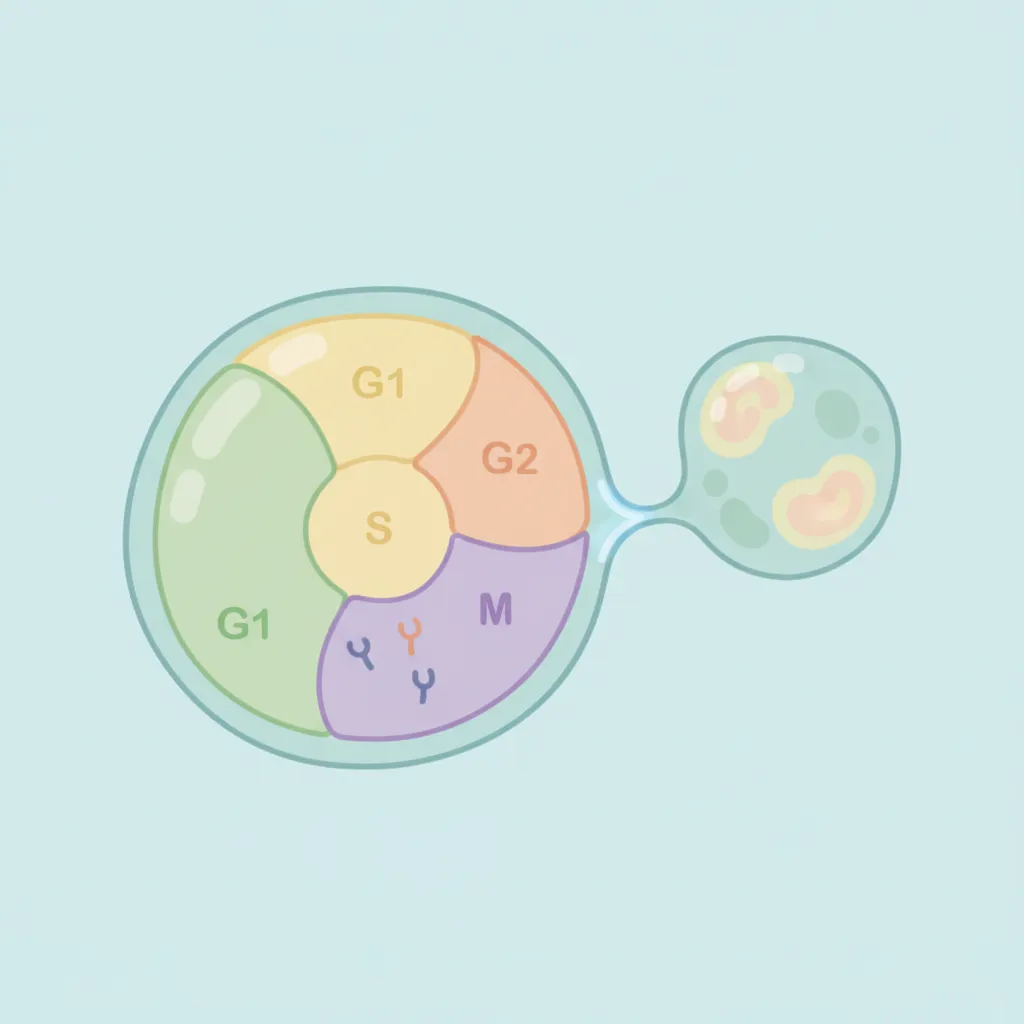
The cell cycle is a super important series of events that allows a cell to grow, copy its internal parts, and then split into two new cells. This amazing process helps living things, like us, grow from a tiny fertilized egg into a full-grown individual. It also constantly repairs and replaces worn-out cells, like those in your skin, hair, and blood, ensuring our bodies stay healthy.
In cells that have a nucleus, called eukaryotic cells, the cycle has two main stages: interphase and the M phase. During interphase, the cell gets ready by growing bigger, gathering nutrients, and making exact copies of its DNA and other important parts. This preparatory phase includes three steps: G1, S, and G2. In G1, the cell grows and makes more proteins and organelles. Then, in S phase, all of its DNA is carefully copied. Finally, during G2, the cell continues to grow and prepares for the actual division.
Sometimes, a cell might take a break from dividing and enter a resting state called G0, which is common for cells like your nerve cells. After getting ready, the cell moves into the M phase, which includes mitosis and cytokinesis. Mitosis is when the cell's nucleus divides, carefully separating all the copied chromosomes into two identical sets. Following this, cytokinesis happens, where the rest of the cell, including its fluid and organelles, splits to form two complete new daughter cells. Special checkpoints throughout the cycle ensure everything happens correctly, and special molecules called cyclins and CDKs help control these steps, making sure cell division happens smoothly and prevents issues like uncontrolled growth.