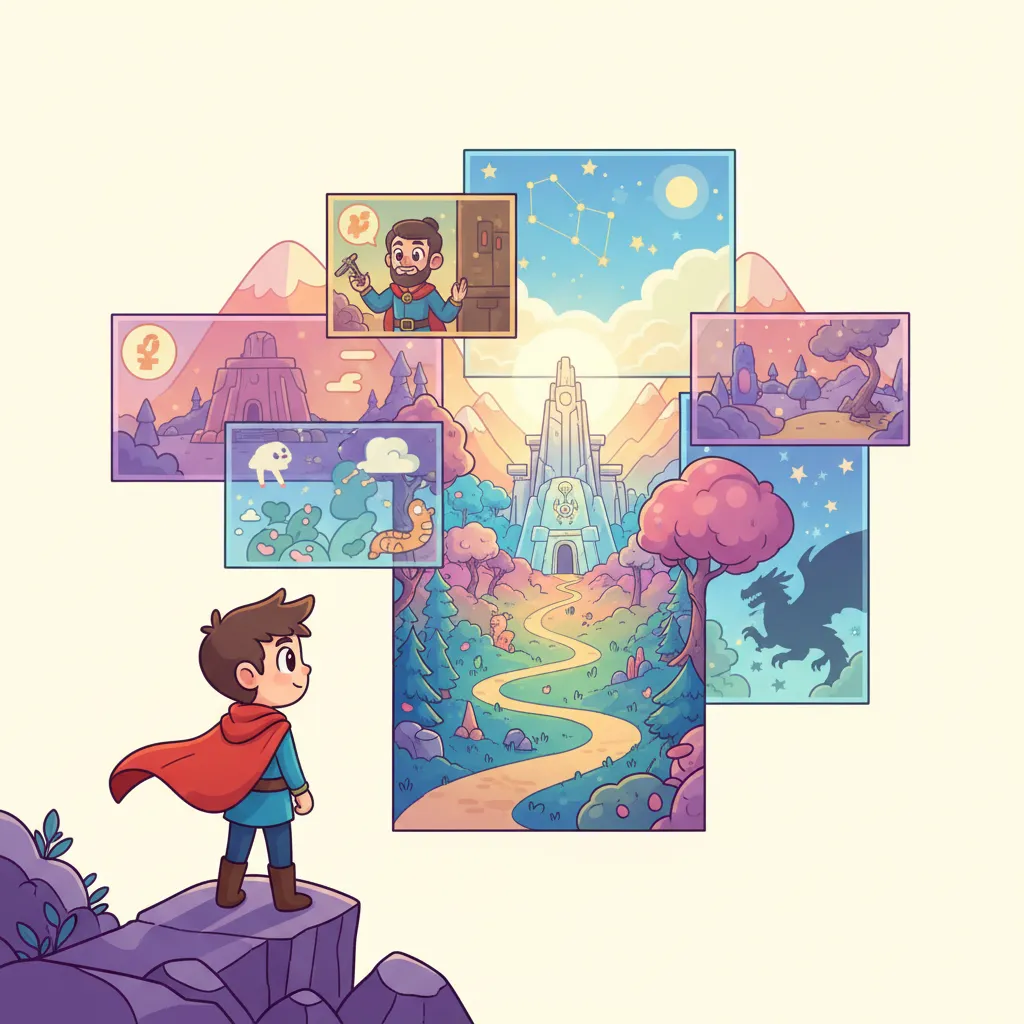
Filmmakers use many special techniques to tell stories and create amazing visual experiences on screen. These methods help shape what you see, how you feel, and even how you understand time and space in a movie.
For example, the way the camera moves is very important. A 'dolly shot' means the camera itself moves closer or further from a subject, while a 'zoom' uses the lens to make things appear closer without the camera moving. You might see a 'high-angle shot' looking down on someone to make them seem small, or a 'low-angle shot' looking up to make them appear powerful. A 'close-up' brings you right into a character's face, letting you see their emotions clearly.
Editing is how different shots are put together to create a smooth story. A 'cut' instantly changes from one scene to another, but a 'dissolve' slowly blends one image into the next, often suggesting time has passed. Sometimes, filmmakers use 'cross-cutting' to show two different things happening at the same time, building suspense. They can even jump back in time with a 'flashback' or forward with a 'flashforward'.
Good lighting is also key; 'backlighting' can create a cool silhouette effect. An 'establishing shot' often starts a scene by showing where everything is happening, like a wide view of a city. All these careful choices, from the camera angles to how scenes are edited, come together to make the movie magic you enjoy!