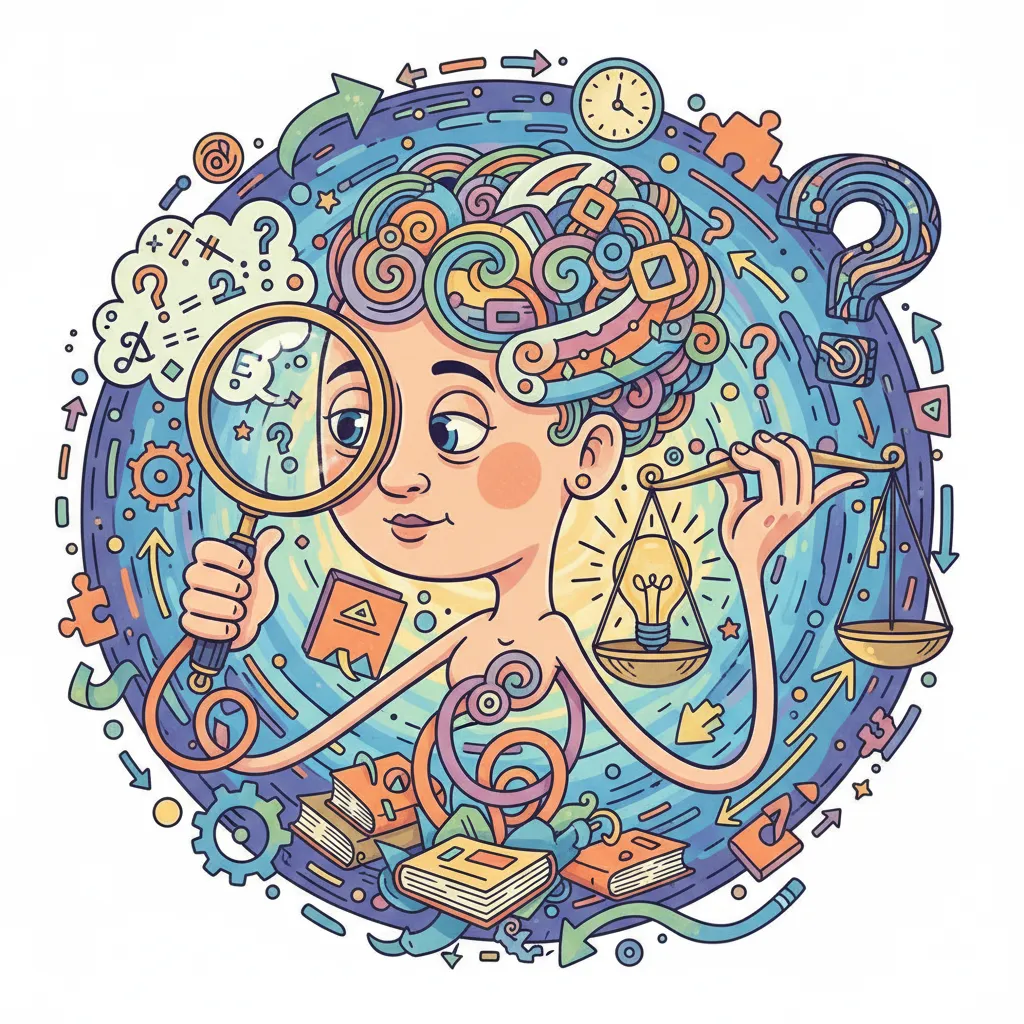
Critical thinking is like being a detective for your own thoughts. It means carefully checking facts, evidence, and arguments to make smart choices. This helps you reach good conclusions in everyday life. You learn to spot hidden assumptions and give strong reasons for your ideas. It also means comparing your thoughts with other viewpoints.
This important skill needs practice, as we are not born with it. You must work to overcome your own biases and be self-aware. The roots of this thinking go back to ancient Greece with Socrates. He encouraged people to always ask questions. Socrates taught that you should not just accept what others say, but look for proof.
Socrates believed asking critical questions was vital for a good life. Later, John Dewey used the modern phrase "critical thinking," stressing reason to understand topics deeply. The word "critical" means "to judge" or "to discern" in old Greek, showing its careful evaluation. Thinking critically means being clear, logical, and open-minded, using evidence to guide your beliefs and actions. Logic plays a big part, helping you figure out if statements are true or false. For instance, deduction uses general rules to find specific facts. Induction finds general patterns from specific examples. These skills improve how you think daily, helping you make the best life decisions.