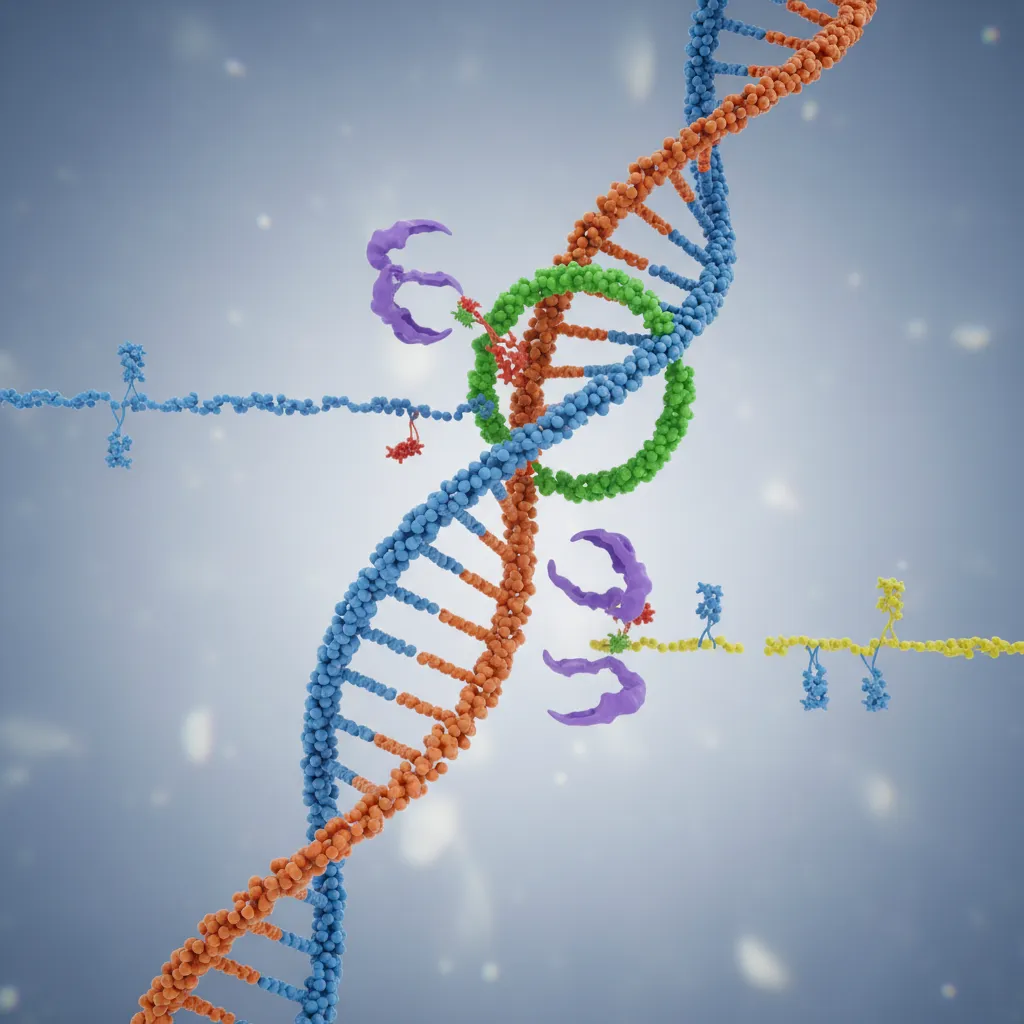
DNA replication is how cells copy their genetic instructions. It's essential for making new cells and fixing damage. This process happens in all living things. The DNA starts as a double helix, two strands twisted together. To make copies, the cell unwinds these two strands. Then, each original strand acts as a guide for building a new partner strand. This copying method is called semiconservative replication. Because of this, each new DNA piece ends up with one old strand and one brand new one. The cell has ways to check the copying carefully to keep mistakes rare.
DNA replication usually starts at specific spots in the DNA called origins. Special enzymes help separate the strands and start the copying process. This whole copying happens during a cell's preparation for division. People can also copy DNA in a lab using special enzymes and machines. This helps scientists study genes and even suggests ideas about how life might have started.