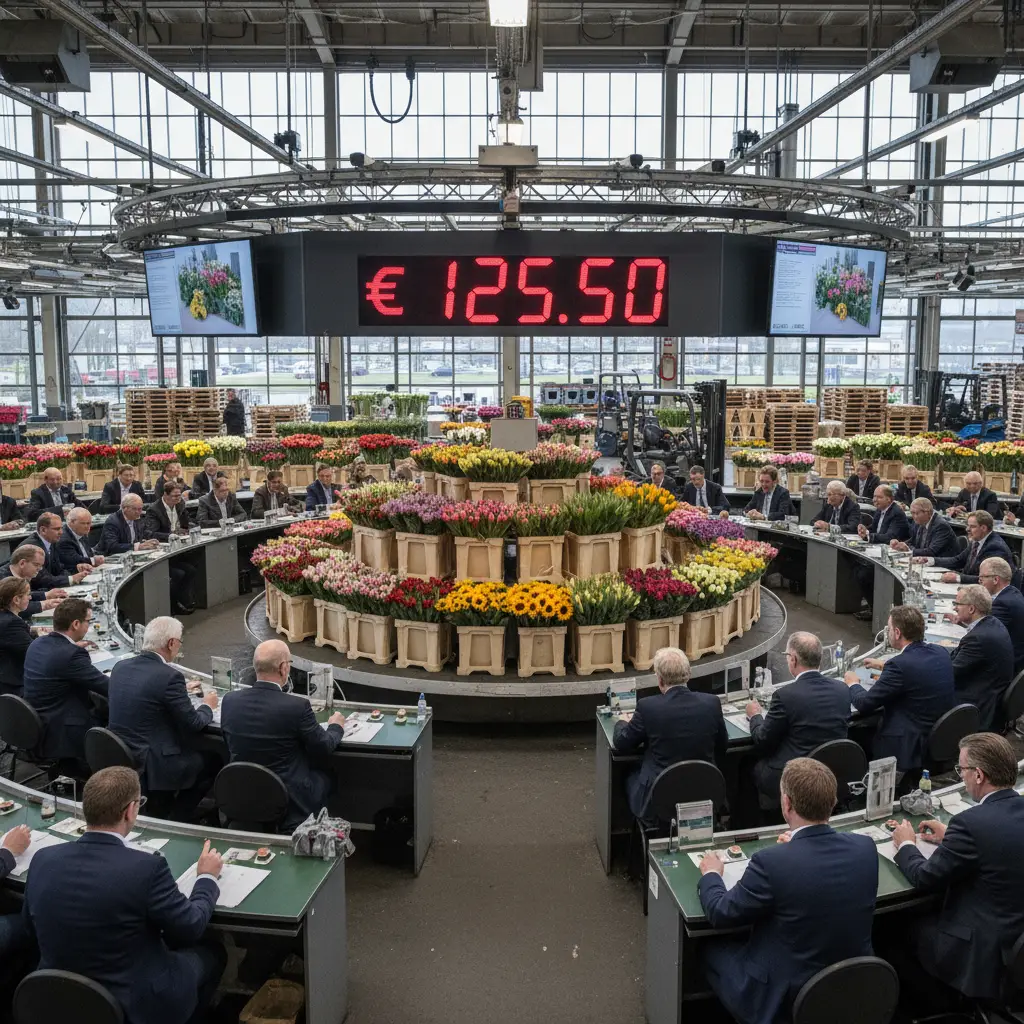
A Dutch auction sells items quickly by starting high and lowering the price until someone buys.
It's different from regular bidding where prices go up.
Think of it like a car auction where the price keeps dropping.
The Dutch started using it for estate sales in the 17th century.
It became popular in England too.
The auctioneer shows the price on a clock or screen.
The starting price is usually high, then it goes down step by step.
The first person to say "mine" gets the item at that lower price.
This method is fast, sometimes leading to lower final prices.
Auctioneers can make more money if the price drops slowly.
Bidders might rush and pay too much.
More bidders usually mean more money for the seller.
Governments and companies use Dutch auctions to sell things.
The U.S. Treasury uses it for bonds.
Companies also use it to buy back their own stock.
eBay used a similar online auction system.
Electronic auctions are faster and cheaper.
There are also hybrid Dutch auctions that mix different styles.