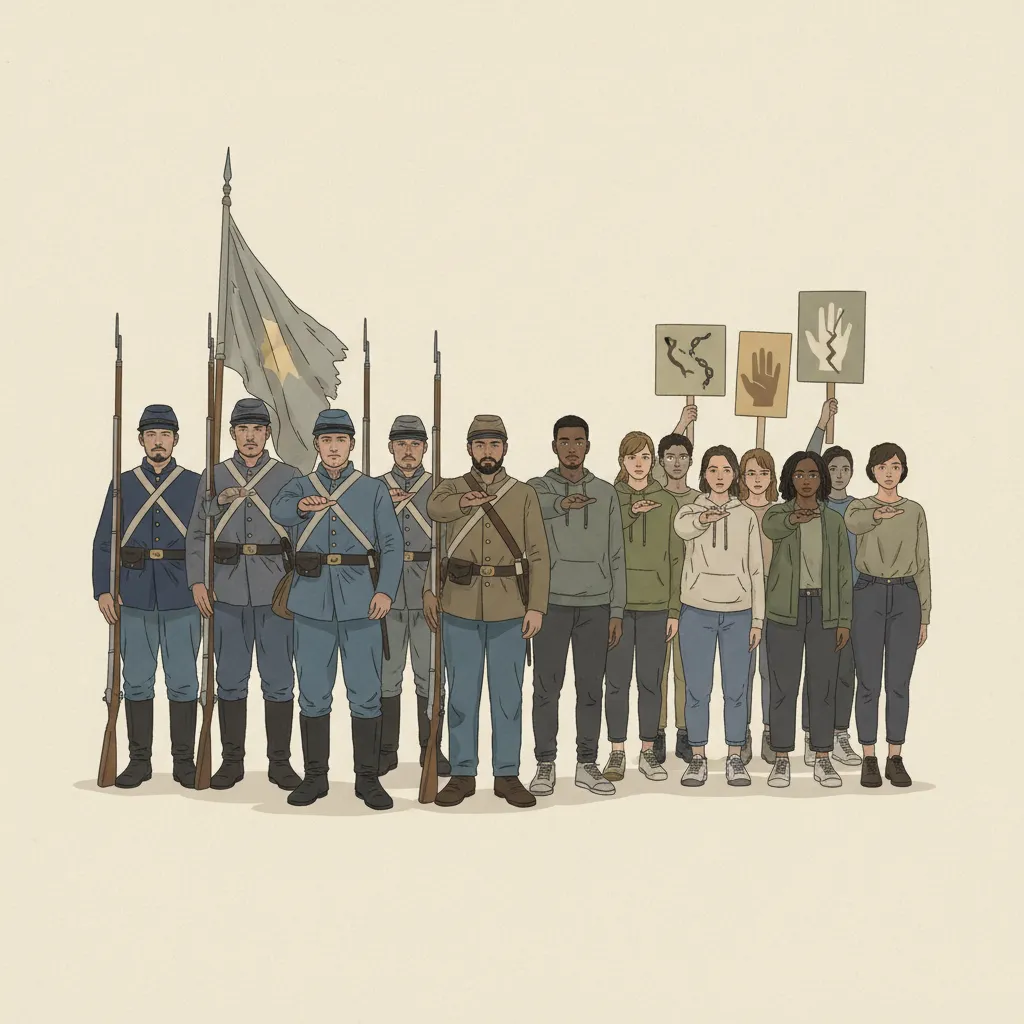
Slavery, where people were treated as property, began in North America in the 16th century, with many individuals brought unwillingly from Africa. After the United States formed in 1776, the nation split, with some states allowing slavery and others banning it. Most enslaved people lived in the Southern states, and though importing new slaves was outlawed in 1808, slavery continued to thrive within the country.
This deep division over slavery eventually led to the American Civil War, fought from 1861 to 1865, when Southern states tried to leave the Union. A central cause of the war was whether slavery should be allowed to expand into new territories. During the war, President Abraham Lincoln issued the Emancipation Proclamation in 1863, declaring many enslaved people in the rebelling Southern states free.
The Union's victory in the Civil War ultimately brought an end to slavery across the entire country. In December 1865, the Thirteenth Amendment was added to the U.S. Constitution, officially making slavery illegal nationwide. This historic amendment finally abolished the cruel system that had lasted for centuries.
Juneteenth, celebrated on June 19th, commemorates the day in 1865 when enslaved people in Texas, the last Confederate state, learned they were truly free. This significant day became a federal holiday in 2021, recognizing the end of slavery and celebrating African-American culture. Even though legal slavery ended long ago, efforts continue worldwide to fight against human trafficking and other forms of modern-day slavery.