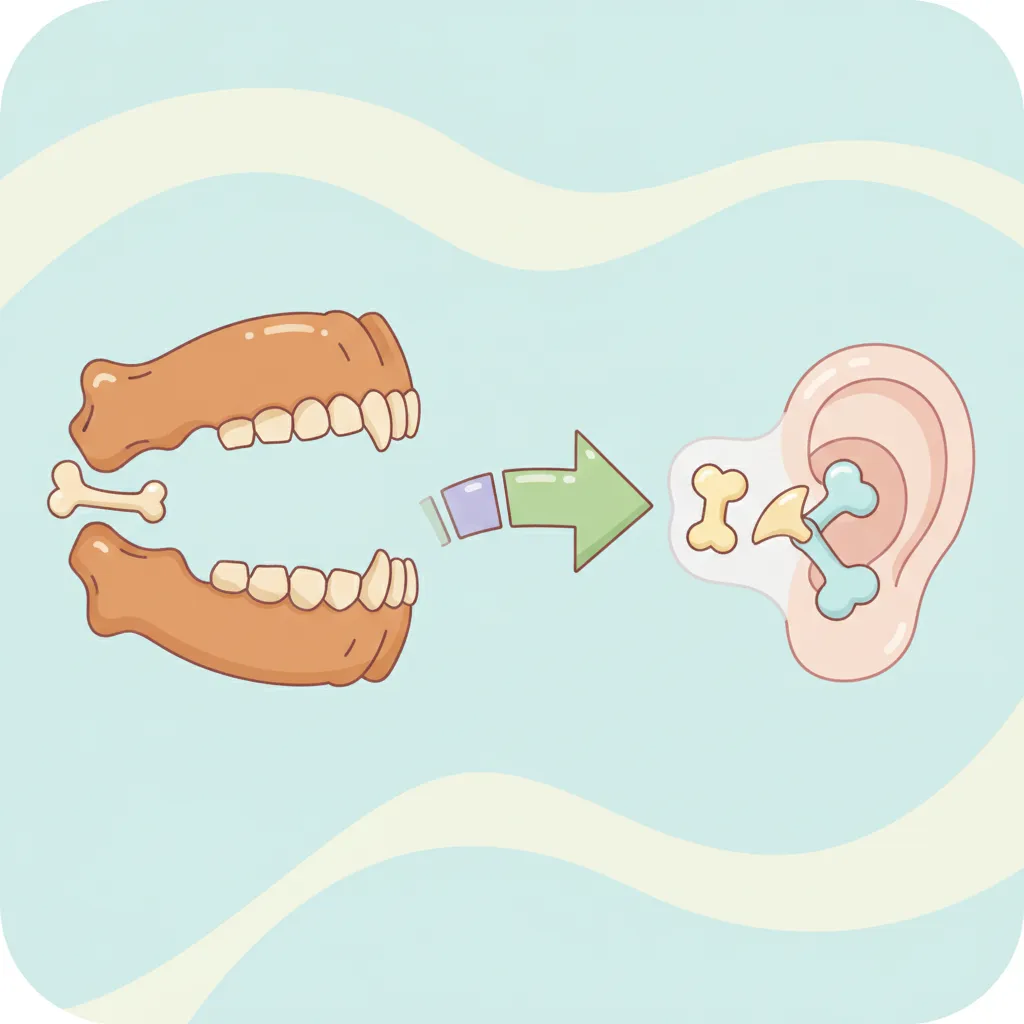
Mammals have a special feature in their ears: three tiny bones called the malleus, incus, and stapes, also known as the hammer, anvil, and stirrup. These bones are essential for our amazing hearing and define what makes a mammal. They actually evolved from bones that were once part of the jaws in ancient reptiles and early mammal ancestors. In these older animals, certain jaw bones, the quadrate and articular, formed their jaw joint, while a single bone, the columella, helped with hearing.
Over millions of years, as mammals evolved, the quadrate and articular bones slowly moved away from the jaw joint. They changed their purpose entirely, becoming the incus and malleus in the middle ear. The columella also became shorter and transformed into the stapes, joining the other two to create a linked system. This incredible change allows sound vibrations from the eardrum to be amplified, giving mammals much sharper hearing, especially for high-pitched sounds.
Scientists discovered this evolutionary journey by studying animal development and comparing fossils. Fossils of creatures like *Morganucodon* show the gradual steps of this transformation, where the lower jaw bone grew bigger, eventually leading to a new jaw joint. The three middle ear bones are now a key characteristic that paleontologists look for to identify ancient mammal remains. This clever system of tiny bones helps match sound vibrations in the air to the fluid in the inner ear, making hearing incredibly sensitive and broad-ranging. It was particularly helpful for early mammals, who were often small and hunted insects in the dark.