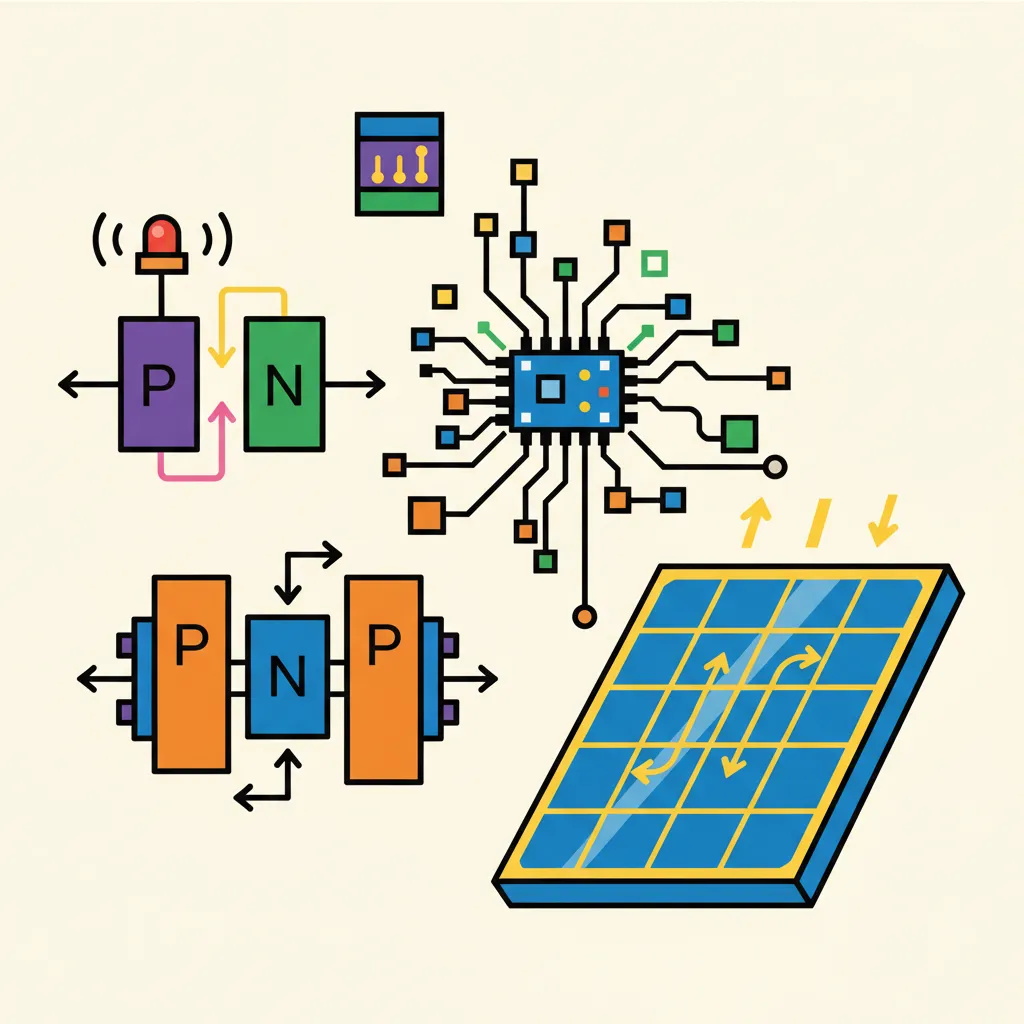
Pure materials that conduct electricity a little bit are called intrinsic semiconductors. To make them much more useful, tiny amounts of other elements are added to them, a process known as doping. This creates an "extrinsic semiconductor," which has better and more controllable electrical properties than a pure one. These added elements, called dopants, provide special particles that carry electric current through the material.
There are two main kinds of extrinsic semiconductors, depending on the dopant used. One is called n-type, where the dopant adds extra electrons, which have a negative charge. In n-type materials, these negative electrons are the main way electricity flows. The other kind is p-type, where the dopant creates "holes" that act like positive charges. These positive "holes" then become the primary carriers of electricity.
Doping allows us to precisely control how well a semiconductor conducts electricity, making it incredibly versatile. This control is essential for almost all modern electronics we use every day. Extrinsic semiconductors are the building blocks for many devices like diodes, which ensure electricity flows in only one direction. They are also crucial for transistors, tiny switches and amplifiers found in every computer chip. You'll also find them in LED lights, solar panels, and even lasers.