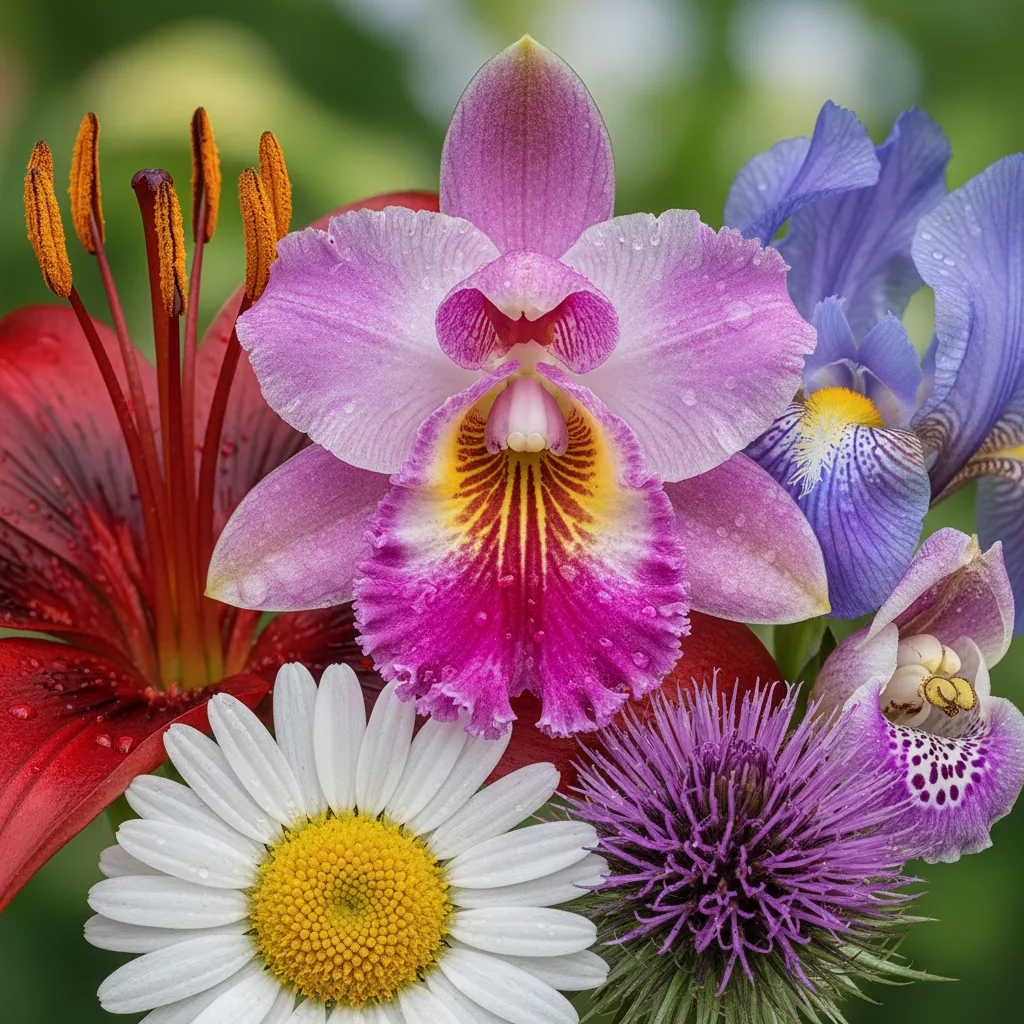
Flowers help plants make new life and reproduce. They usually have four main parts. Sepals protect the bud like small leaves. Petals are often colorful or have nice smells. This helps attract pollinators such as bees. Stamens create pollen, which holds male cells. The female part gets the pollen and contains female cells.
For new plants to grow, pollen must move. This movement is called pollination. Animals, wind, or water can carry the pollen. After pollination, tiny cells join together. This creates a seed, which holds a new plant. The female part often turns into a fruit. Fruits protect seeds and help them spread widely.
Flowers evolved long ago, becoming vital for ecosystems. People value them for beauty, medicine, and food. They also hold deep meanings in many cultures. Flowers show amazing variety in size, shape, and color.