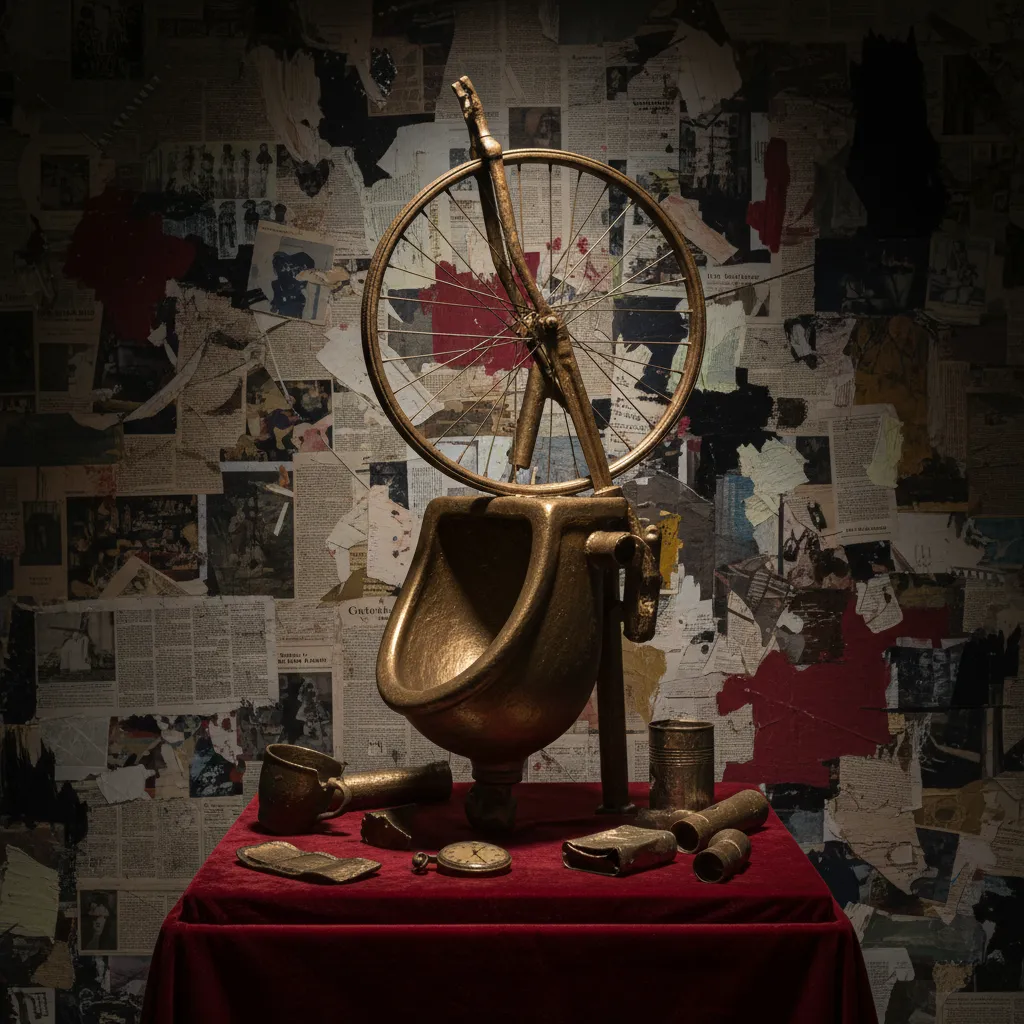
Found art uses ordinary items that aren't usually considered art materials. Pablo Picasso was one of the first to use this idea by sticking a printed image of chair caning onto a painting in 1912. Marcel Duchamp made the concept famous a few years later with his "readymades," everyday objects he simply chose and declared to be art, like his famous "Fountain" urinal from 1917.
These objects become art because the artist decides they are, and how they are displayed or their history also plays a big role. This idea was quite shocking at first, challenging traditional thoughts about what truly counted as art, and it still sparks conversations today, such as with Tracey Emin's unmade bed in a gallery. Found art encourages you to think deeply about everyday things and see them in a new light.
Artists always add their own idea or intention when presenting a found object, often giving it a title, and sometimes the object is slightly changed but still recognizable. Simply moving an object and calling it art can change how we see its purpose and value.
Long before Duchamp, East Asian scholar's rocks were collected from nature and admired for their beauty with minimal changes. Artists in the Dada and Surrealist movements, like Man Ray with his iron with nails, quickly adopted found objects, and this practice continued into Pop Art and Fluxus. Today, you can even find "trash art" made from discarded items, sometimes to raise awareness about waste, and found objects are even used to make music. Found objects remind us that art can be anywhere, inviting us to look closely at the world around us.