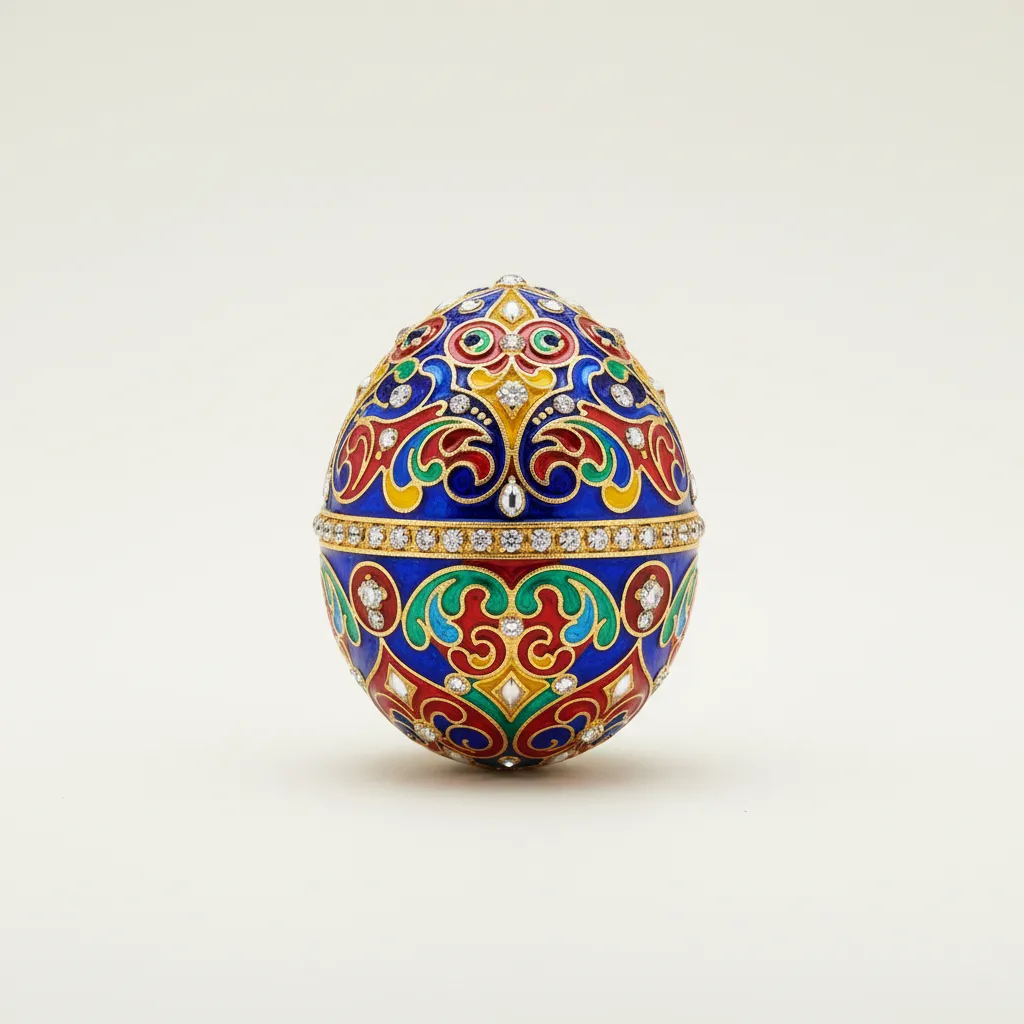
The House of Fabergé was a famous jewellery company founded in Saint Petersburg, Russia, in 1842 by Gustav Fabergé. The firm became renowned for creating stunning, jewel-encrusted Fabergé eggs for Russian emperors, as well as many other high-quality pieces. The Fabergé family actually came from France in the 1600s, fleeing religious persecution, and their name changed over generations as they moved through Europe. Gustav's son, Carl Fabergé, born in 1846, became the most famous member of the family. He traveled extensively to learn about jewelry design and craftsmanship before taking over the family business in 1872.
The company gained a special royal seal of approval in 1885, earning the title "Goldsmith by special appointment to the Imperial Crown." This important connection began the cherished tradition of Carl Fabergé designing a unique, surprise Easter egg for the Tsars each year. He had total artistic freedom, and even the Tsar didn't know what masterpiece would be unveiled! Fifty Imperial eggs were created in total, but unfortunately, only 43 of these incredible works of art are known to exist today. Beyond the eggs, Fabergé also crafted tiny, intricate sculptures of animals, people, and flowers from beautiful hardstones, which were highly sought after by collectors worldwide.
After the 1917 Russian Revolution, the Fabergé company was nationalized, and the family had to flee Russia to save their lives. Carl's sons later opened a new jewelry business in Paris in 1924, continuing their father's legacy. For a while, the Fabergé name was licensed for many different products, including popular perfumes like Brut and even clothing lines. However, today the brand is owned by a different company and is focused solely on exquisite jewellery and gemstones once more.