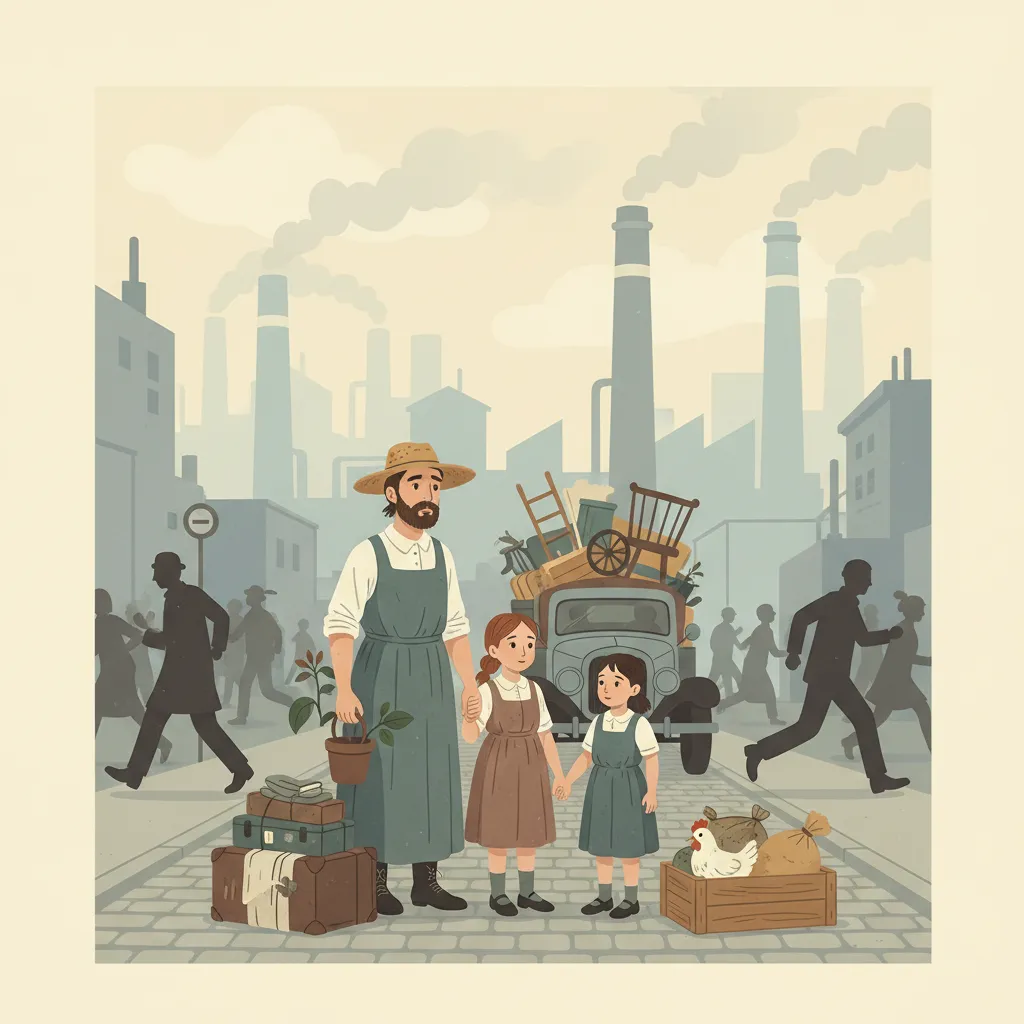
Industrialization is a major change where a society moves from being mostly farming-based to focusing on manufacturing goods in factories, which completely reorganizes how an economy works. In the past, this often involved polluting industries, but now there's a push for cleaner, more advanced technologies. As people get factory jobs and earn more, they tend to buy more things, which helps the economy grow even further.
The very first big shift, known as the Industrial Revolution, began in Great Britain in the mid-1700s. It brought new inventions, caused people to move from farms to factories, and encouraged financial investments in new businesses. Later, in the mid-1800s, the "Second Industrial Revolution" saw improvements like the steam engine, electricity, and the invention of the assembly line. During this time, factories became the main workplaces instead of homes.
Industrialization led to significant social changes, including the rise of social classes based on economic power. Many people moved from rural areas to crowded cities, which caused diseases to spread more easily due to poor living conditions. Family structures changed too, with nuclear families becoming more common and extended families living further apart. Unfortunately, it also led to an increase in child labor before education systems became widespread. Today, there's ongoing discussion about balancing economic growth with environmental care in industrial development around the world.