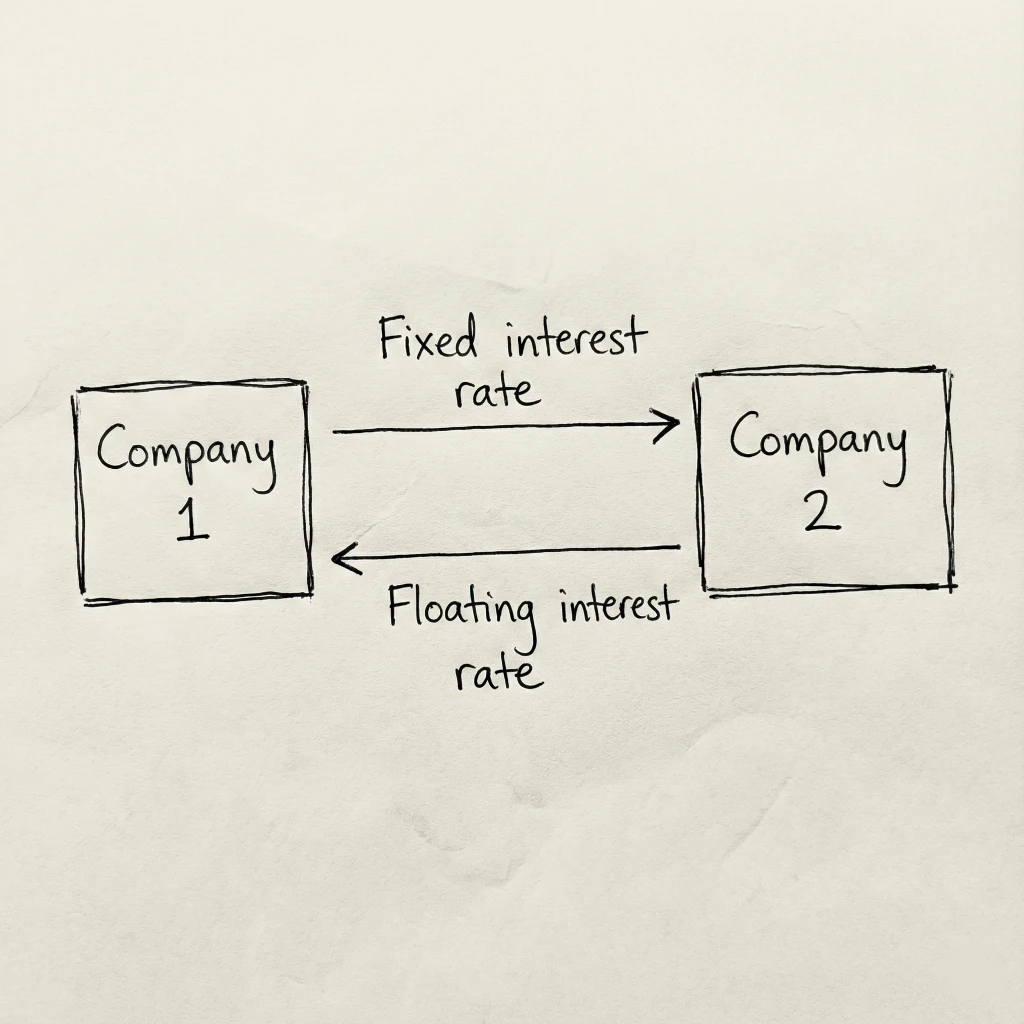
Imagine two companies deciding to trade their interest payments. They do this based on a pretend loan amount, not a real one. One company might promise to pay a fixed interest rate that never changes. The other agrees to pay a rate that goes up or down over time. These deals are called interest rate swaps. They help businesses manage how much they pay or receive in interest. Swaps first became widely known in the 1980s. They helped large organizations handle different financial needs.
In a typical swap, one side pays a fixed amount. The other side pays a rate linked to a market index, like SOFR or SONIA. This lets a company lock in a steady payment they can rely on. Another might benefit from a potentially lower, but variable, rate. Companies use swaps to protect themselves from future rate shifts. They also use them to adjust how long their debts or investments last. Swaps can even show what companies think about where interest rates will go.