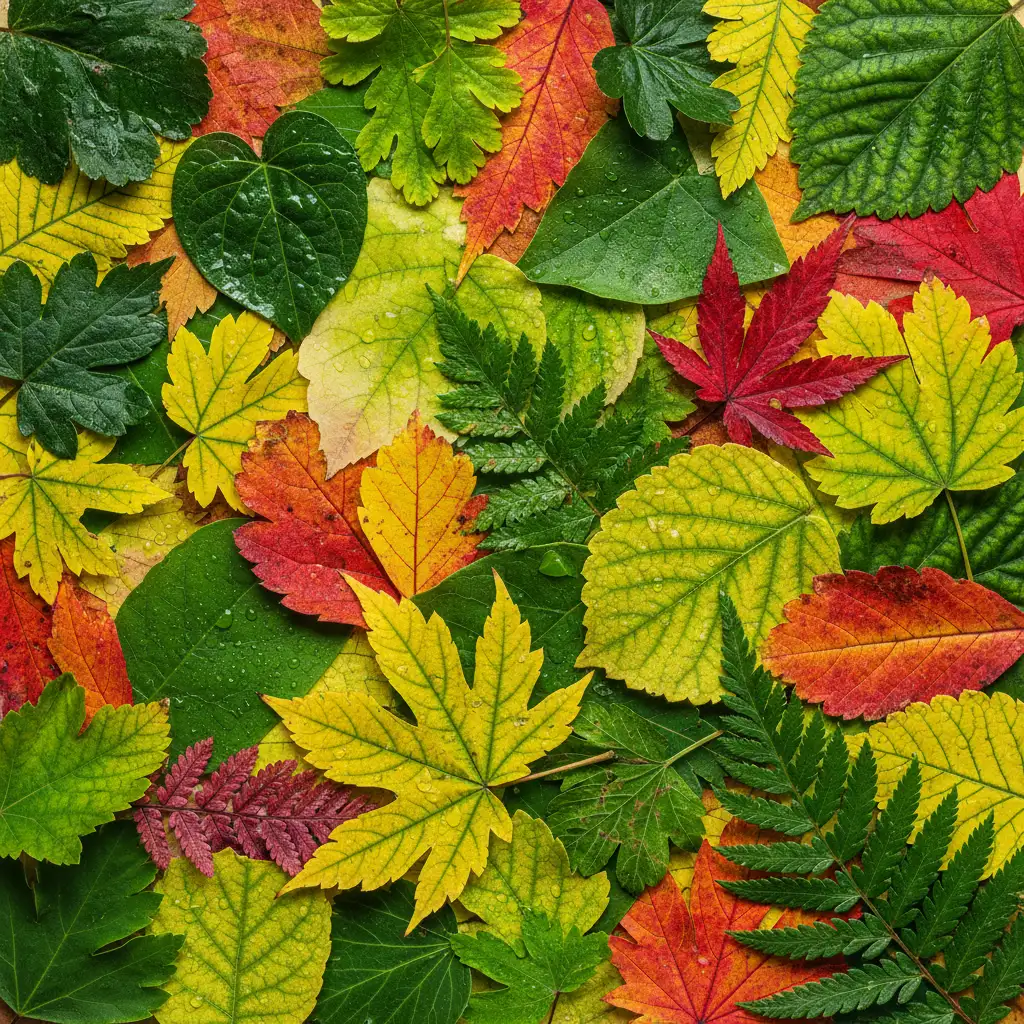
Leaves are amazing parts of plants, mainly found on stems above ground. Their most important role is making food for the plant through a process called photosynthesis. Leaves are usually green because they contain chlorophyll, a special substance that captures sunlight. They often have a flat blade, which is the main part, and a stalk called a petiole that connects them to the stem. Leaves have tiny pores called stomata, mostly on their underside, which help them take in carbon dioxide and release oxygen and water vapor.
You'll notice leaves come in all sorts of shapes, sizes, and textures, depending on the plant species and where it lives. For instance, broad, flat leaves are great for catching lots of sunlight, while needle-like leaves, like those on pine trees, are perfect for cold, snowy places. Some leaves are super unique, like the thick, juicy ones on succulents that store water, or the sharp spines on cacti that protect them.
Inside, leaves are designed to get as much sunlight and carbon dioxide as possible to feed the plant. They also play a big part in drawing water up from the roots to the rest of the plant. Many plants, like the trees in autumn, drop their leaves when it gets cold or dry, but others, like evergreen trees, keep theirs all year long. Because leaves are so full of good stuff, they are a vital food source for many animals.