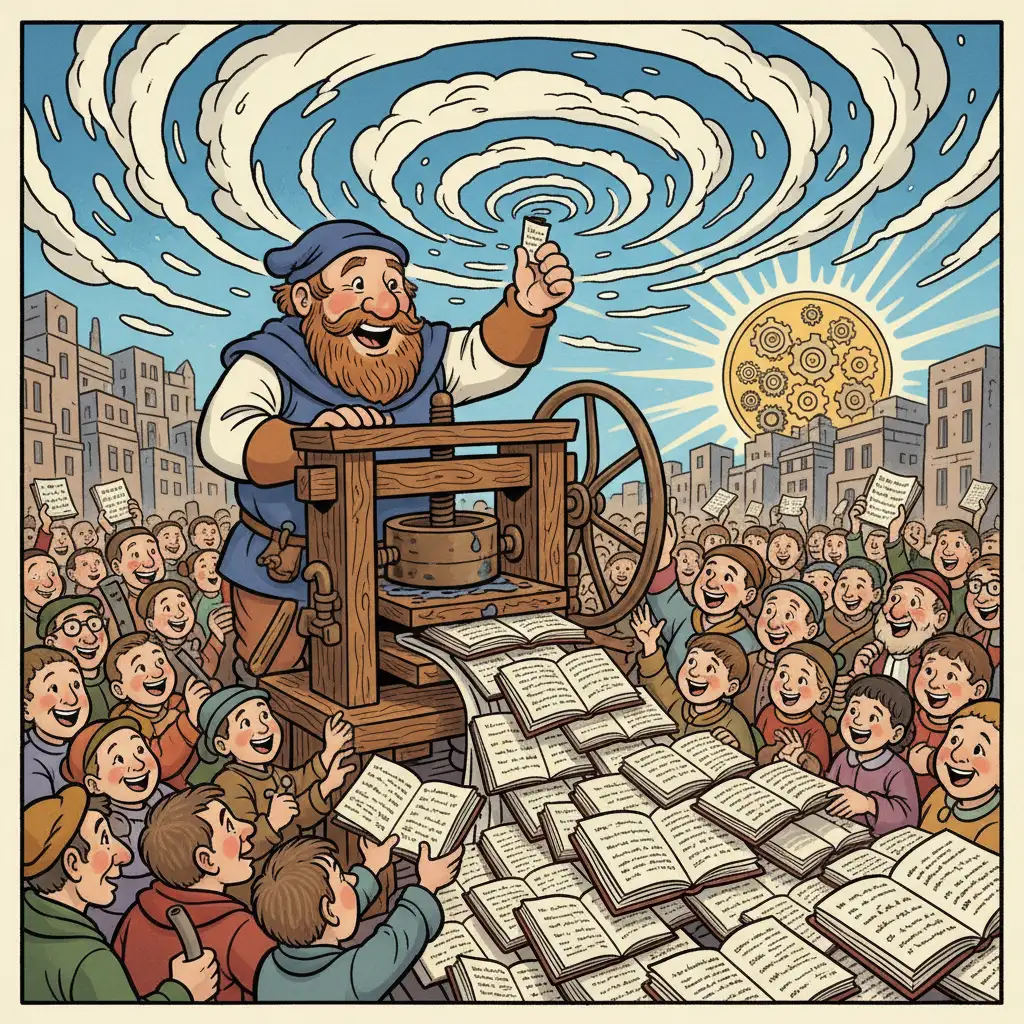
A printing press is a machine that puts ink onto paper or cloth. It uses pressure to transfer words and pictures clearly. Before this, people had to copy books by hand, which was very slow. The press made printing much faster and simpler than ever before.
Johannes Gutenberg invented the movable-type printing press. He was a goldsmith from Germany, around the year 1440. This important invention started the Printing Revolution. His new machine could print thousands of pages in a single day.
Gutenberg also made special molds to create many metal letters. These letters could be moved around to print different pages. This made books cheaper and easier for everyone to get. The idea quickly spread from Germany across all of Europe.
Soon, countless books were printed, sharing new information widely. By the 1500s, millions of copies were available, helping ideas travel. The printing press truly began the age of mass communication. More people learned to read because books became very common. This helped shape new ways of thinking and developing societies. Later, stronger steam-powered presses allowed for even larger scale printing.