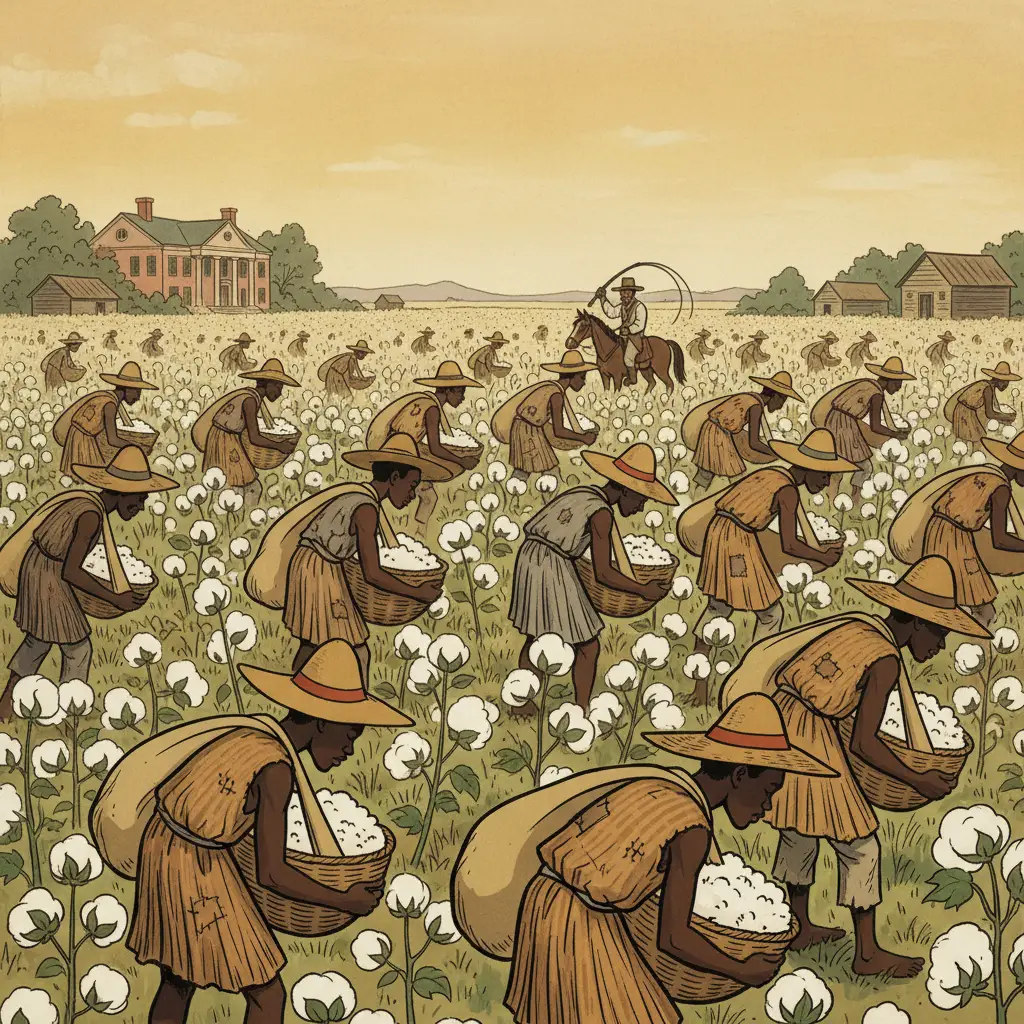
Slavery was a legal practice in the United States from its start in 1776 until 1865, mostly in the Southern states. This system began earlier during colonial times, treating enslaved people, mainly from Africa, as property. They could be bought, sold, or even given away, and children of enslaved mothers were also automatically enslaved. By the American Revolution, slavery was deeply rooted and tied to African ancestry. After the Revolution, many Northern states slowly began to outlaw slavery.
The issue of slavery caused big disagreements when the U.S. Constitution was written. Leaders made compromises, like counting enslaved people as three-fifths of a person for political power. This gave Southern states more influence in government. The invention of the cotton gin greatly boosted the need for enslaved workers in the Deep South. These states became very dependent on enslaved labor, creating a huge national divide. This split the country into Northern "free states" and Southern "slave states." Over one million enslaved people were sold from the Upper South to work on new cotton farms.
Arguments over slavery expanding into new Western lands led to major political problems and even violence. When Abraham Lincoln became president in 1860, he promised to stop slavery from spreading. Many Southern states then left the Union, starting the American Civil War. During the war, the Emancipation Proclamation helped free many enslaved people. After the Union won, the Thirteenth Amendment was added to the Constitution in December 1865, banning slavery everywhere, except as punishment for a crime.