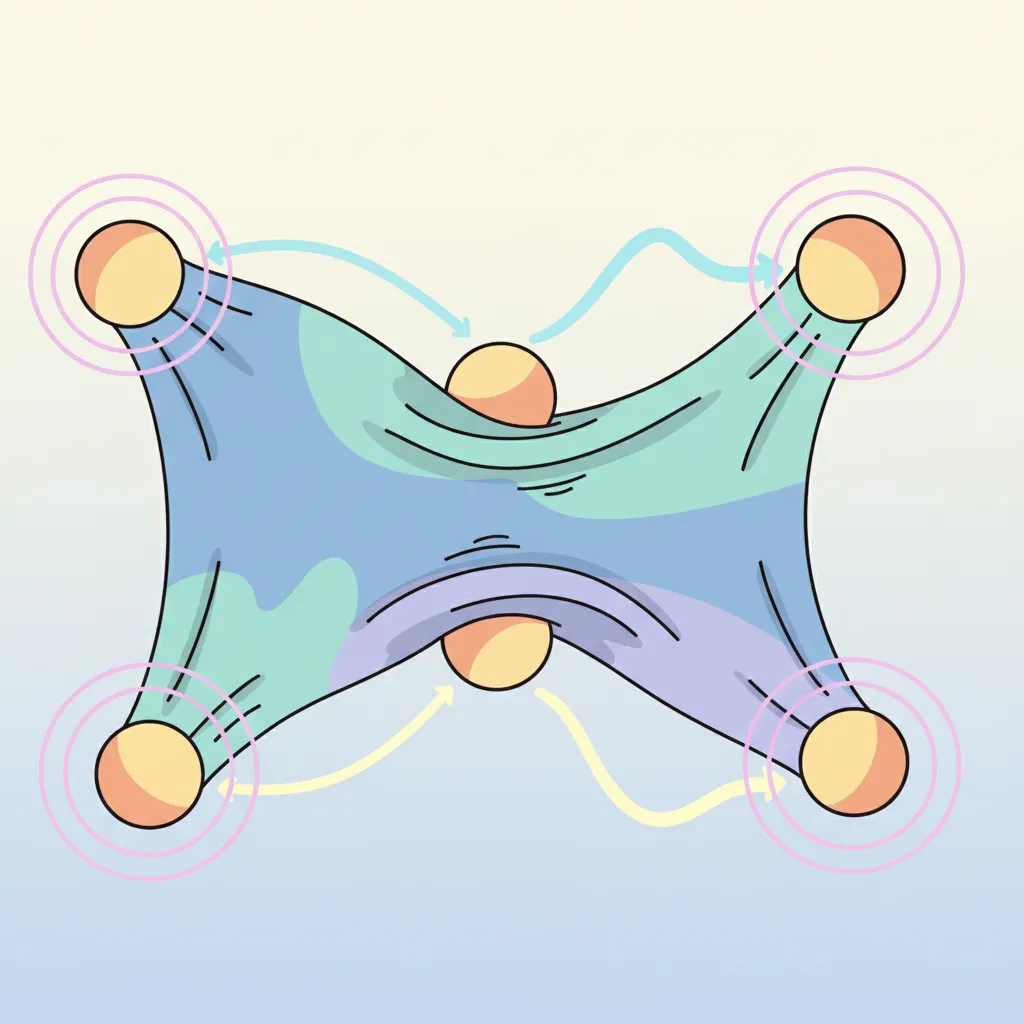
Soft-body dynamics is a fascinating area of computer graphics that helps create really lifelike physical movements for squishy, changeable objects. You often see this technology in video games and movies, helping to make things look incredibly realistic. Unlike solid, stiff objects, soft bodies can change their shape, but they still try to hold onto their original form, not just flow like water. This includes simulating everything from muscles, fat, and hair to clothing and fabric.
One common way to simulate these objects is using spring-mass models, where the object is made of tiny points connected by stretchy springs. Another more accurate method is called finite element simulation, which breaks the object into many small pieces to calculate how forces affect it. Other techniques, like energy minimization, make objects settle into shapes that use the least amount of energy, similar to a soap bubble. Shape matching also helps by constantly trying to pull the object back to its original form.
Cloth simulation is a special type of soft-body dynamics that focuses on how fabrics and clothes move and wrinkle. Early force-based methods, which calculate all the tiny spring forces, were often tricky to make stable and fast enough for games. Because of this, many real-time game engines now use position-based dynamics, which works by solving a series of small rules to make the cloth look correct. It's also very important for these soft objects to interact realistically with their surroundings, meaning they need to detect when they bump into things or even themselves. Figuring out these collisions, especially when cloth folds onto itself, is a big challenge to make games and movies truly believable.