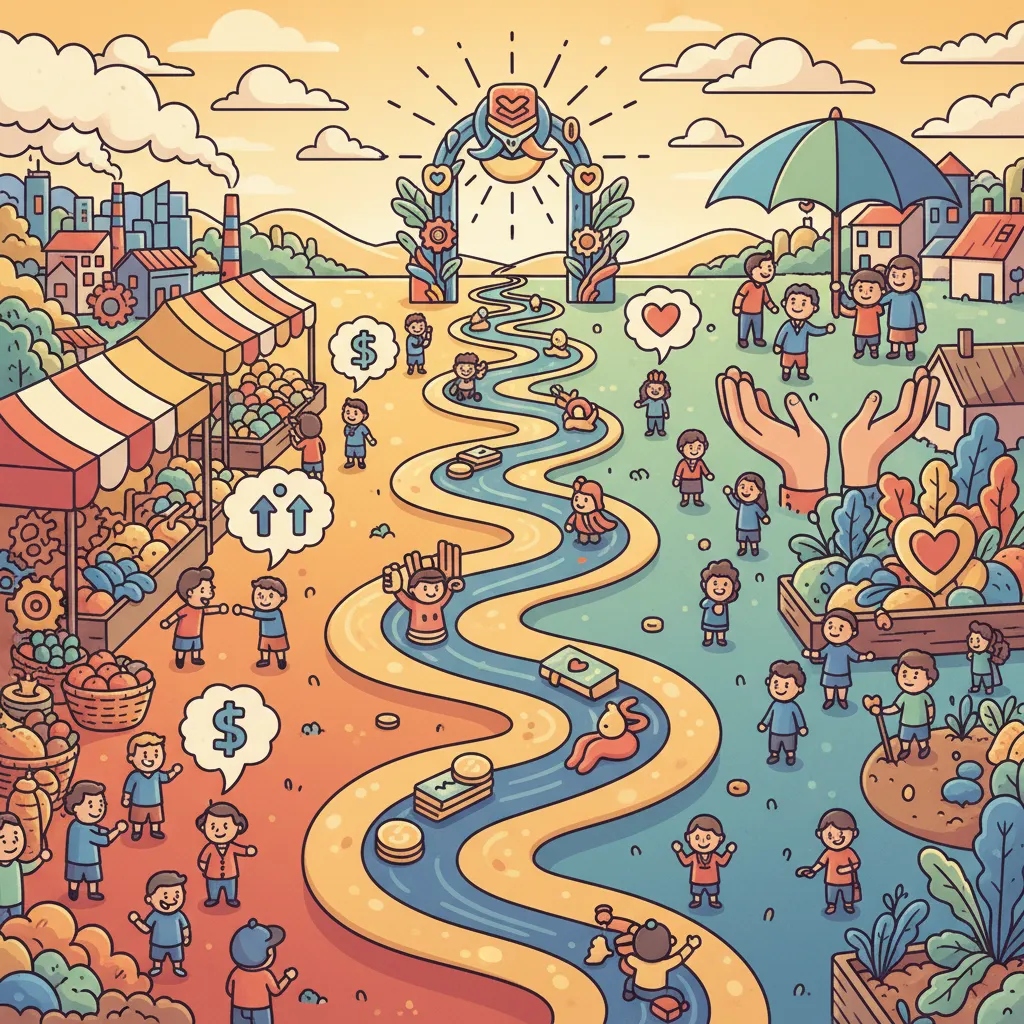
The Third Way is a political idea that aims to find a middle path between typical left-wing and right-wing approaches. It tries to combine parts of a free-market economy with social programs that help people. Instead of focusing only on welfare, it supports things like job training and education to give people a "hand-up." This way, it balances less government control of the economy with some government spending to boost social well-being.
This approach gained popularity in the 1980s when leaders started rethinking older economic ideas. Famous leaders like Bill Clinton in the United States and Tony Blair in the United Kingdom were strong supporters of the Third Way. Tony Blair explained his kind of socialism as being about values like social justice, moving away from rigid economic systems. A major thinker, Anthony Giddens, described it as an ethical way to improve capitalism rather than needing to get rid of it entirely.
Followers of the Third Way often support collaborations between public and private groups and careful government spending. They emphasize balancing equal opportunities with personal responsibility for everyone. Protecting the environment and investing in people's skills are also important goals. While many see it as a progressive update, some critics on the left felt it abandoned traditional values, while some on the right thought it still involved too much government. This approach believes that a healthy economy is the best way to generate money for social improvements.