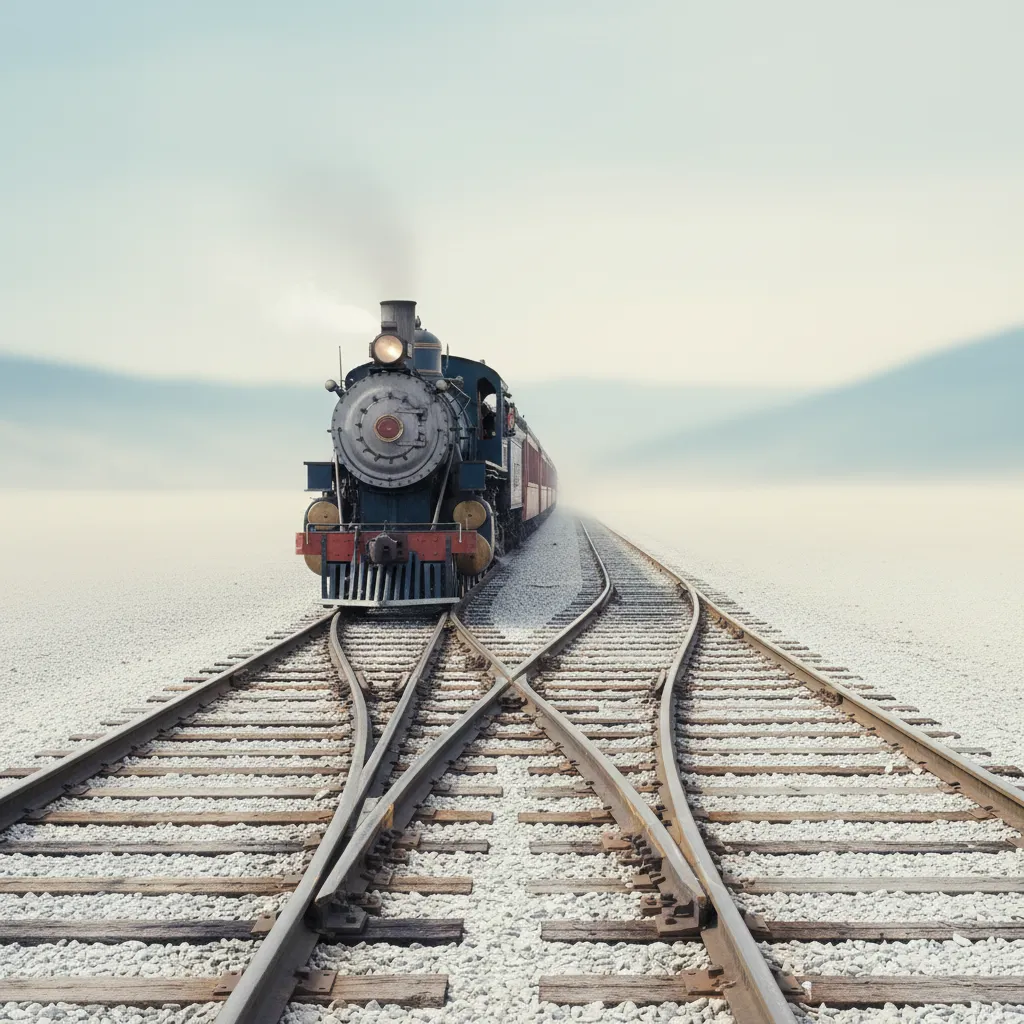
Trains in America originally ran on many different track sizes, ranging from very narrow to quite wide. Southern railroads often chose wider tracks, sometimes to carry large cotton bales, while northern lines often used narrower ones or the eventually common "standard gauge." This variety caused big problems because trains couldn't easily travel between different railway systems. To solve this, the first transcontinental railroad was required to use standard gauge, which is 4 feet 8.5 inches wide.
Over time, standard gauge became much more popular, especially in the Northeast. The southern states even switched almost all their tracks to standard gauge during a massive two-day conversion in 1886. Today, nearly all major train lines in the U.S. use this standard size, making travel and shipping much smoother. However, some local city transit systems, like subways or streetcars, might still use different gauges because they don't need to connect with the main railroad network.
For example, New York's Erie Railroad once used a wide 6-foot gauge for bigger trains, and Portland, Maine, had a 5-foot-6-inch gauge for specific shipping routes. Some historic streetcar systems in Pennsylvania still use unique gauges too. On the narrower side, the famous San Francisco cable cars use a 3-foot-6-inch gauge. The most popular narrow gauge was 3 feet, used by many railways in the West, and you can still ride some of these scenic lines today.