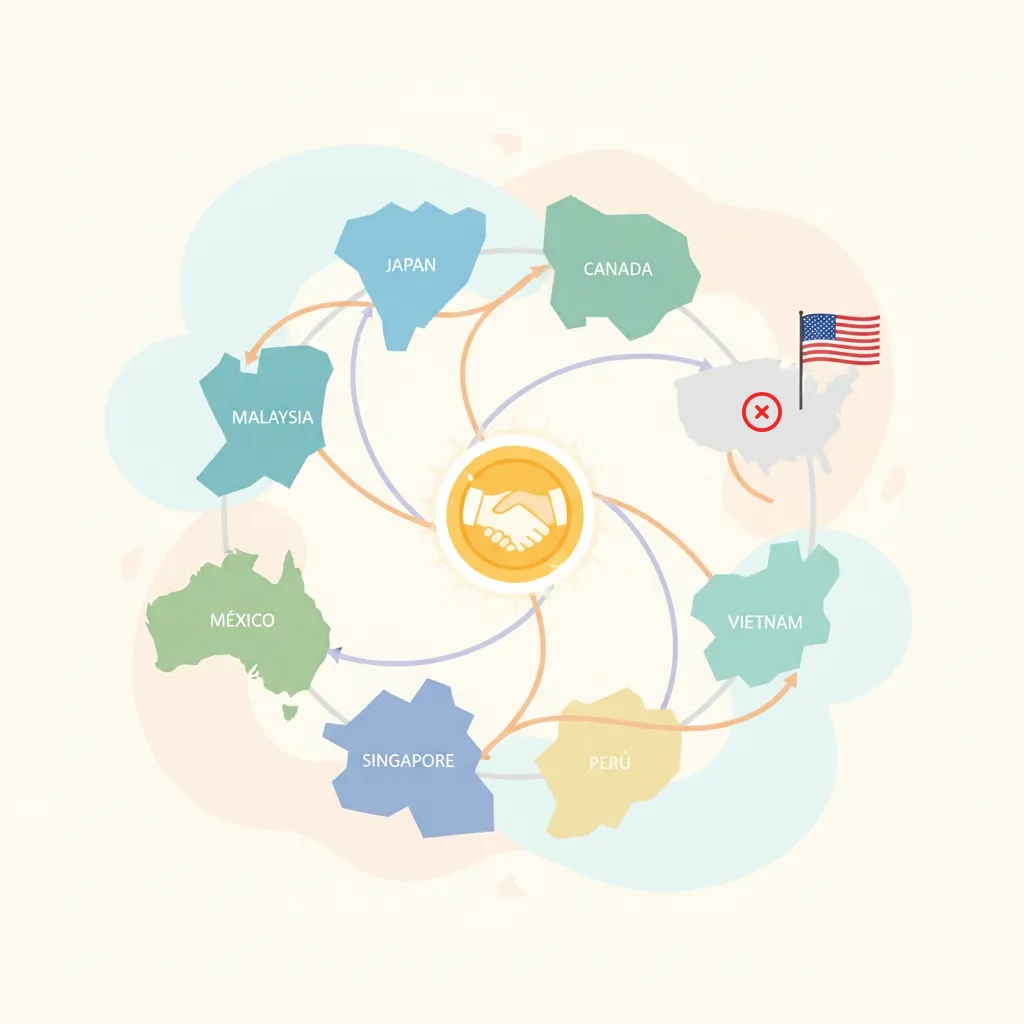
The Trans-Pacific Partnership, or TPP, was a big proposed trade agreement involving twelve countries around the Pacific Ocean. These countries included Australia, Canada, Japan, Mexico, New Zealand, Singapore, Vietnam, and the United States, among others. The main goal was to make it easier for these nations to trade with each other by reducing various taxes on goods and other barriers. Even though representatives signed the agreement in February 2016, it never actually became law because the United States decided not to join.
Many people in the U.S., including prominent politicians like Hillary Clinton and Donald Trump during their 2016 presidential campaigns, expressed strong opposition to the deal. After becoming president in January 2017, Donald Trump officially pulled the United States out of the TPP, making it impossible for the original agreement to take effect. However, the other eleven countries didn't give up on the idea!
They worked together to create a new, very similar agreement called the Comprehensive and Progressive Agreement for Trans-Pacific Partnership, or CPTPP. This new deal officially began in December 2018 for the countries that ratified it. Experts believed the original TPP would have boosted economies for all members and helped these countries connect more, possibly reducing their reliance on trade with other large nations. Many other countries, including South Korea, Taiwan, and more recently the United Kingdom and China, have shown interest in joining the CPTPP.