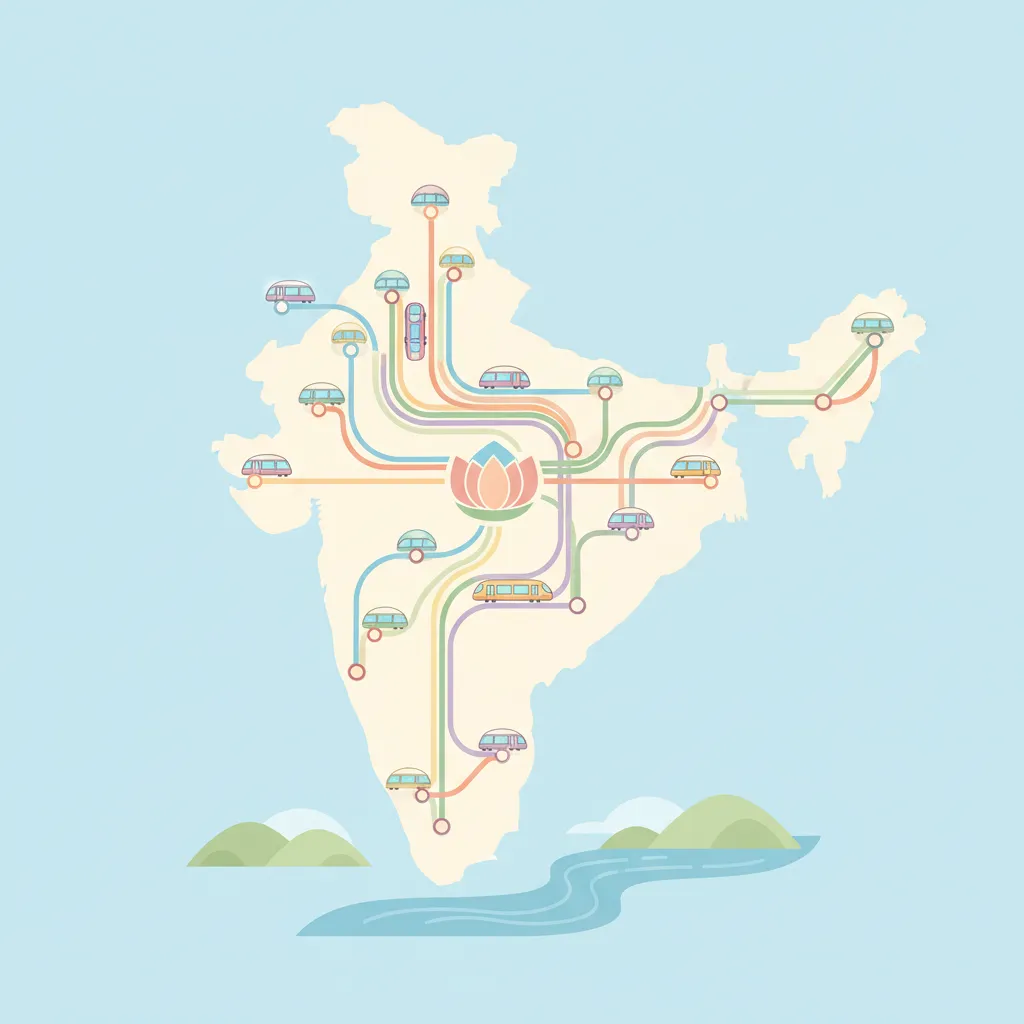
India has many different kinds of train systems to help people get around its cities, including Metros, local suburban trains, Monorails, and even old-fashioned Trams. The Metro era began in Kolkata in 1984, and these modern train networks quickly became very popular in other large cities like Delhi and Bengaluru. By 2025, 36 billion people were traveling annually on Metro systems in 15 major Indian cities, making India one of the busiest places for city train travel in the world. The Delhi Metro alone transports more than 4.6 million passengers daily, and across the country, over 1,000 kilometers of Metro lines are now operational, placing India's network as the third longest globally. The Ministry of Urban Development helps oversee and approve all these important urban rail projects, guided by a national policy.
The very first urban rail system in India was actually the suburban railway in Mumbai, which started way back in 1853, making it Asia's first. Trams were also a common sight in major cities around the early 1900s, though Kolkata is the only city where they still run today. While newer systems like the Delhi-Meerut Regional Rapid Transit System zoom at a super-fast 160 km/h, some experiments like the Mumbai Monorail faced challenges. These challenges included low passenger numbers and high costs, which led many cities to choose regular Metro or light rail systems instead of Monorails.
Today, there are 20 active Metro systems spread across 17 Indian cities, with Delhi Metro boasting the biggest network and Kolkata Metro having the country's unique underwater line. Many more metro lines are currently being built, showing India's strong commitment to developing its modern public transportation for everyone.