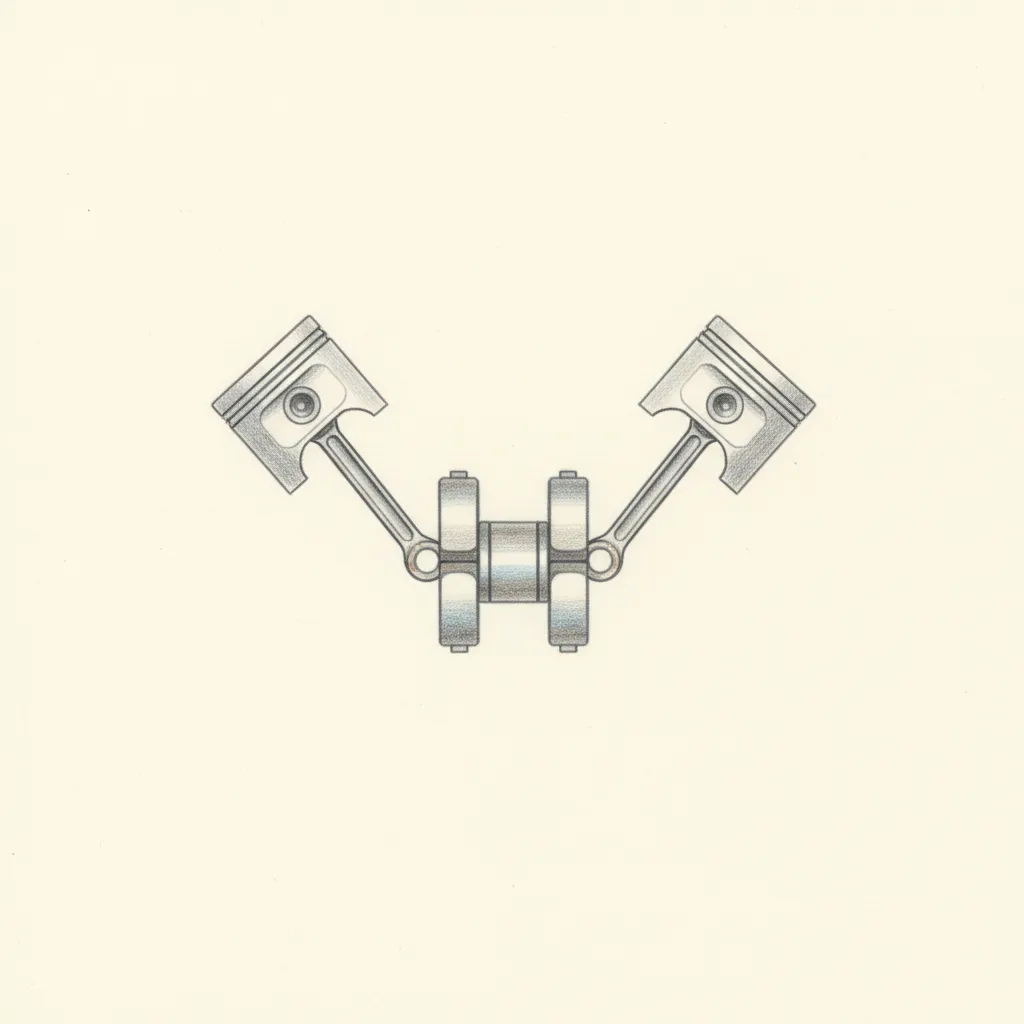
A V8 engine is a special kind of engine that has eight cylinders arranged in a "V" shape, with all of them sharing one central spinning part called a crankshaft. The very first V8 engine was made in France in 1904 by a person named Léon Levavasseur for the Antoinette company, and it was used in speedboats, cars, and even early airplanes. Other companies like Renault and Buchet also started making V8s for race cars around the same time.
Most V8 engines are built with a 90-degree angle between their two cylinder banks, which helps them run very smoothly with fewer vibrations. However, this wide angle can make the engine quite large. Some car manufacturers, like Ford and Volvo, have used narrower 60-degree V-angles to fit these powerful engines into smaller cars, often using special parts to help balance them and reduce shaking.
Many V8 engines found in regular road cars use a "cross-plane" crankshaft. This design makes the engine very balanced and is responsible for that deep, rumbling sound V8s are famous for. In contrast, many racing V8s use a "flat-plane" crankshaft, which is lighter and helps them achieve higher speeds and performance, even if they might vibrate a bit more. Iconic sports cars like Ferraris and McLarens often feature flat-plane V8 engines.
The first V8 engine in a car you could drive on the road was a Rolls-Royce back in 1905. The popularity of V8 engines really grew in America after the Ford Flathead V8 was introduced in 1932, making them more common. However, in more recent times, fewer new passenger cars use V8s as companies focus on making vehicles that are more fuel-efficient or electric. V8 engines have also been extremely important in many types of racing, including Formula One, NASCAR, and drag racing, where they create incredible amounts of power.