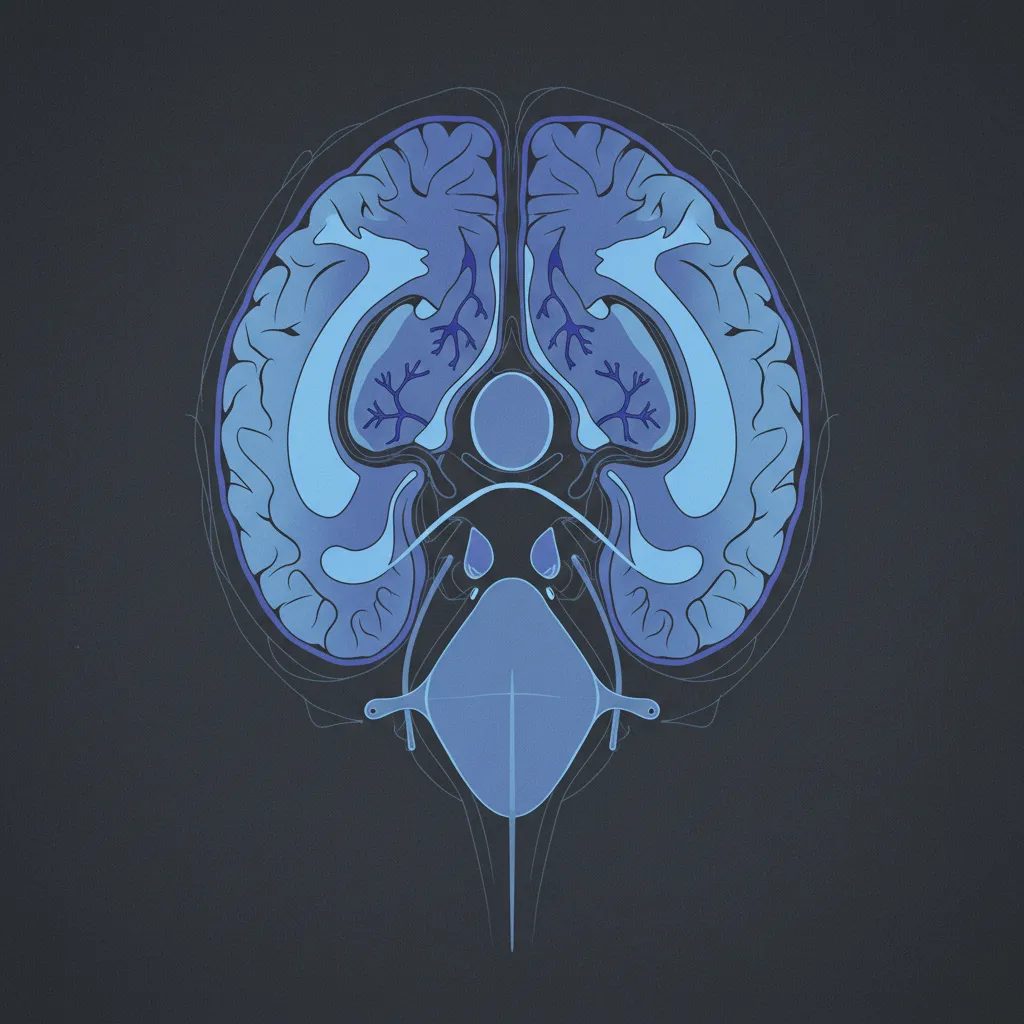
Your brain contains a special network known as the ventricular system. It has four connected spaces, or ventricles, filled with fluid. Two large ventricles sit on each side of your brain. Another ventricle is in the middle, and a fourth is near the back. These spaces link up to a tube that runs down your spine. The ventricles are lined with a special tissue called ependyma. This tissue forms a protective wall between blood and brain fluid.
Small parts inside the ventricles create cerebrospinal fluid, or CSF. CSF flows through these ventricles and down into your spine. It also circulates around your entire brain and spinal cord. This fluid cushions your brain, keeping it safe from bumps. It helps your brain float, so it does not press on itself. CSF also helps keep brain chemicals balanced.
The ventricular system starts to form early, even before birth. It develops from a simple tube as the brain grows. Sometimes, the fluid pathways can get blocked. This blockage leads to too much fluid, a condition called hydrocephalus. Hydrocephalus can cause harmful pressure inside the skull.