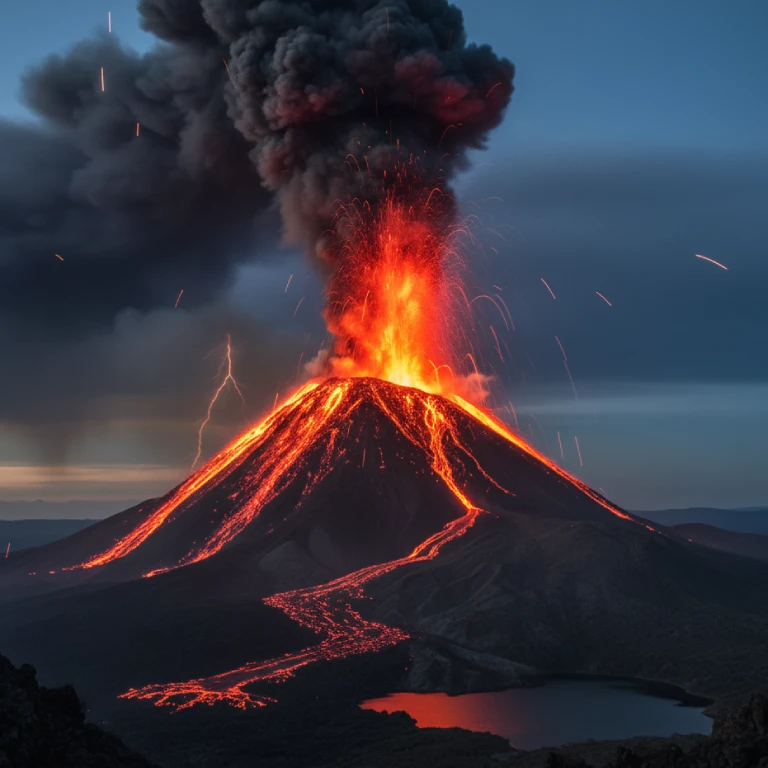
Volcanoes are amazing mountains that sometimes erupt, letting out powerful stuff from inside the Earth. An eruption is essentially a big release of built-up pressure from deep underground. Imagine a shaken soda bottle; when you open it, fizz rushes out a volcano works somewhat similarly.
Scientists have discovered that volcanoes don't all erupt in the same manner. Some volcanoes consistently have a similar, predictable eruption style. However, others can dramatically switch their style during one eruption event.
There are three main reasons eruptions occur. Sometimes, gases trapped within gooey magma push it out forcefully. Other times, super-hot rock mixes with water, creating an explosive steam-driven blast. When magma and water mix directly, it can also lead to powerful eruptions.
Not all eruptions are super violent; gentle ones, like those often seen in Hawaii or under the ocean, produce flowing lava. More explosive eruptions, like Strombolian and Vulcanian types, are much more dramatic. The truly massive and powerful eruptions are called Pelean and Plinian, while Ultra-Plinian eruptions are the biggest blasts known. Scientists use the VEI scale to measure the size of an eruption, from small burps to huge, impactful events. While many eruptions are minor, the largest ones can cause significant disasters.